
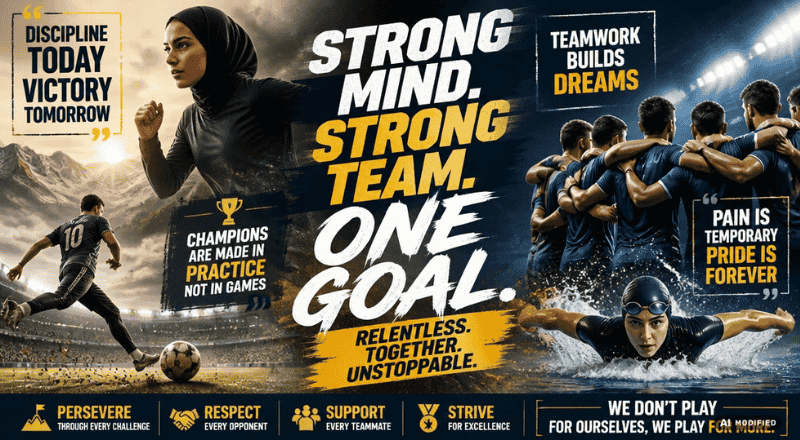
 In competitive sports, where victories depend on fractions of a second or slight variations, the key to success often lies in mental strength. While physical training builds the body, it is the spirit that carries an athlete across the finish line. This spirit is often distilled into a few powerful words: the sports motto. These iconic sports mottos and team slogans serve as the heartbeat of a franchise, the rallying cry of a nation, and the personal mantra of the world’s most elite competitors.
From the ancient arenas of Greece to the neon-lit stadiums of the modern era, sports culture has always relied on motivational sayings to capture the essence of perseverance, teamwork, and the pursuit of excellence.
Iconic Sports Mottos
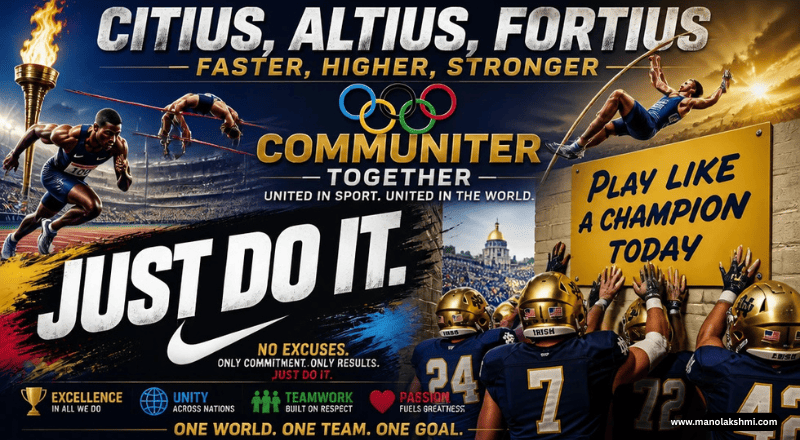
When discussing the most influential athletic phrases in history, one must begin with the Olympic Games. The traditional Olympic motto, “Citius, Altius, Fortius”—Latin for “Faster, Higher, Stronger”—was adopted at the creation of the International Olympic Committee in 1894. It serves as a universal call to excellence, urging athletes to push the boundaries of human potential. In 2021, the word “Communiter” (Together) was added, reflecting a modern shift toward global unity and teamwork.
In the realm of professional sports, few phrases carry as much weight as Nike’s “Just Do It”. While technically a brand slogan, it has transcended marketing to become a foundational piece of sports history. It encapsulates the “no excuses” winning mindset that defines athletic success.
Another iconic example is found in the halls of Notre Dame. The sign that reads “Play Like a Champion Today” is more than a decoration; it is a sacred ritual. Every player touches the sign before heading onto the field, a physical manifestation of their dedication to the legacy of the programme.
“Winning isn’t just important—it’s the one thing that truly defines us.” — Vince Lombardi
Origins & History
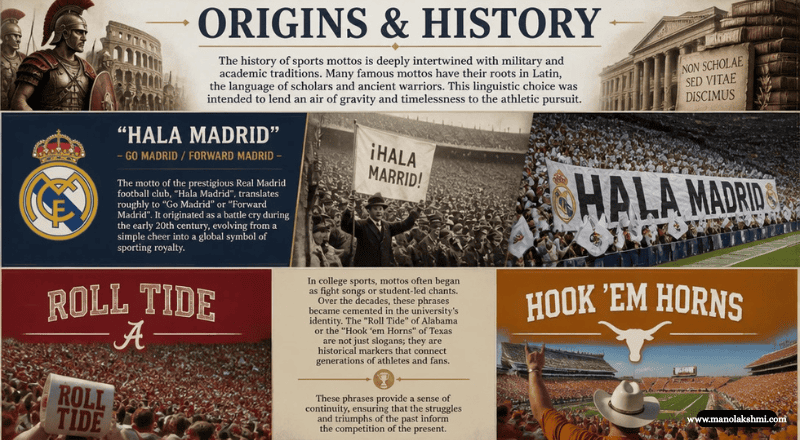
The history of sports mottos is deeply intertwined with military and academic traditions. Many famous mottos have their roots in Latin, the language of scholars and ancient warriors. This linguistic choice was intended to lend an air of gravity and timelessness to the athletic pursuit.
For example, the motto of the prestigious Real Madrid football club, “Hala Madrid”, translates roughly to “Go Madrid” or “Forward Madrid”. It originated as a battle cry during the early 20th century, evolving from a simple cheer into a global symbol of sporting royalty.
In college sports, mottos often began as fight songs or student-led chants. Over the decades, these phrases became cemented in the university’s identity. The “Roll Tide” of Alabama or the “Hook ‘em Horns” of Texas are not just slogans; they are historical markers that connect generations of athletes and fans. These phrases provide a sense of continuity, ensuring that the struggles and triumphs of the past inform the competition of the present.
Team Slogans & Their Impact
Team slogans do more than sell jerseys; they forge an unbreakable bond between the players and the community. A powerful motto creates a shared identity, turning a group of individuals into a unified force.
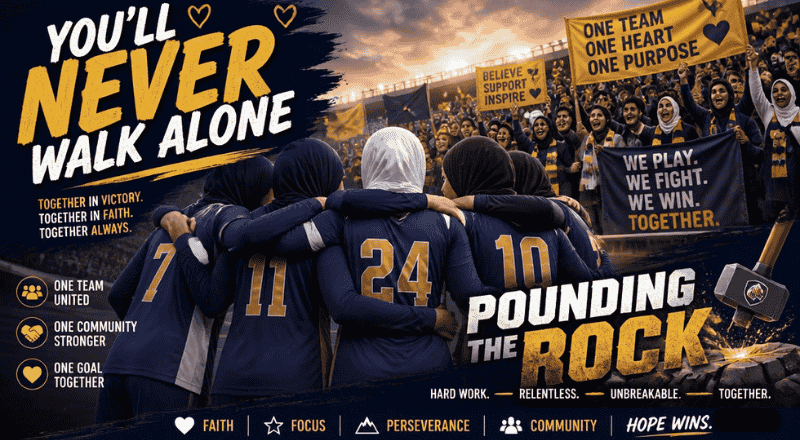
Consider Liverpool FC’s legendary anthem and motto: “You’ll Never Walk Alone.” This phrase provides a profound sense of belonging. In times of tragedy and times of triumph, the motto reminds players and fans alike that the weight of the competition is shared. It transforms a game of football into a communal experience of perseverance and hope.
In American professional sports, the San Antonio Spurs utilise a unique motto known as “Pounding the Rock”. This is based on a quote by social reformer Jacob Riis:
“When nothing seems to help, I observe a stonecutter hammering away at a rock a hundred times without a crack. Yet, on the hundredth blow, it splits, reminding me that it wasn’t just that last strike. But all the previous efforts that led to it.”
This motto perfectly illustrates the importance of dedication and the “process” over immediate results. It teaches athletes that success is the result of cumulative effort, even when progress is invisible.
Motivational Phrases in Athletics

At the individual level, motivational sayings act as a form of psychological armour. Athletics is as much a mental battle as a physical one, and athletes often use “self-talk” or personal mottos to navigate moments of extreme pressure.
Phrases centred on perseverance are particularly common. The “Mamba Mentality”, popularised by the late Kobe Bryant, became a global phenomenon. It isn’t just about winning; it’s about the constant quest to be the best version of oneself. It emphasises the “grind”—the early mornings, the late nights, and the refusal to give up.
“Leave No Doubt” is a common phrase used to remind teams to play so dominantly that the officiating or luck cannot influence the outcome.
“Finish Strong”: A mantra used in endurance sports to encourage athletes to maintain their integrity and effort until the very last second.
“Next Man Up”: A professional sports staple that emphasises teamwork and the collective over the individual, reminding the squad that the mission continues regardless of injuries or setbacks.
These athletic phrases serve as mental anchors, helping competitors stay focused on their goals amidst the chaos of a high-pressure environment.
Sports Culture & Winning Mentality
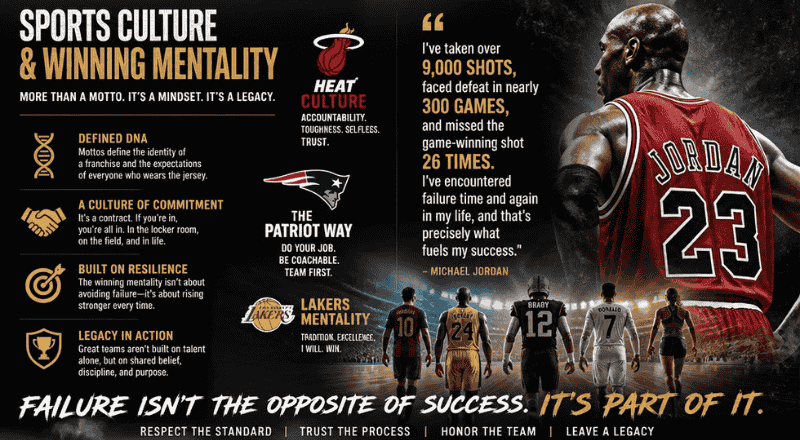
The culmination of these mottos and slogans is the development of a distinct sports culture. This culture is built on the foundation of a winning mentality. A psychological state where the athlete is prepared for every eventuality and remains committed to their purpose.
Mottos help define the “DNA” of a franchise. The “Heat Culture” in Miami or the “Patriot Way” in New England are not just slogans but sets of behavioural expectations. They dictate how an athlete practises, how they treat their teammates, and how they carry themselves off the field. In these environments, the motto is a contract: if you wear the jersey, you commit to the mindset.
I’ve taken over 9,000 shots, faced defeat in nearly 300 games, and missed the game-winning shot 26 times. I’ve encountered failure time and again in my life, and that’s precisely what fuels my success. — Michael Jordan
This quote from Jordan illustrates that the ultimate sports motto is often rooted in the acceptance of failure as a stepping stone to greatness. The winning mentality isn’t about the absence of defeat; it is about the refusal to be defined by it.
In conclusion, sports mottos are the linguistic legacy of the athletic world. They bridge the gap between the physical act of playing and the emotional experience of competing. Whether they are etched into the stone of a stadium or whispered in the silence of an athlete’s mind. These phrases provide the inspiration, dedication, and perseverance required to achieve greatness. They remind us that while the game eventually ends, the spirit of the motto endures forever.
FAQ: Frequently Asked Questions About Sports Mottos
Q1: What is the most famous sports motto?

The most internationally recognised sports motto is the Olympic motto: “Citius, Altius, Fortius – Communiter” (faster, higher, stronger – together). In terms of commercial success and cultural impact, Nike’s “Just Do It” is also considered a premier sports-related slogan.
Q2: Why do sports teams use mottos?
Teams use mottos to build brand identity, foster a sense of unity among players, and provide fans with a rallying cry. Psychologically, mottos help focus the mind and provide motivation during difficult training or high-pressure game situations.
Q3: How do mottos help athletes with perseverance?

Mottos act as a “mental reset”. When an athlete faces exhaustion or failure, a short, powerful phrase can remind them of their long-term goals and the importance of resilience, helping them push through the “wall”.
Q4: Can a motto really change the performance of a team?
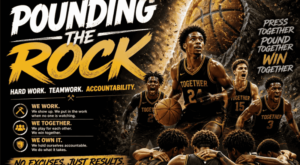
While a motto alone won’t win a game, the culture it creates can. A motto that emphasises accountability and hard work (like San Antonio’s “Pounding the Rock”) can influence the daily habits of players, leading to better preparation and, ultimately, better performance.
Click here to visit my page: Games: 30 Historical Facts and Benefits of Games

Elevate your lifestyle with our curated content on technology, sports, travel, health, and fashion. Stay ahead of the trends and make informed choices.