- Optical Illusion Quiz: 25 Questions to Explore the Mind’s Eye
- How Perception Works
- The Brain’s Role in Sight
- Mind Tricks & Visual Puzzles: 25 Questions and Answers
- The Phenomenon of Color and Contrast
- Geometry and Perspective
- Q: Why do parallel lines look like they converge in the distance?
- Q: What is the “Müller-Lyer Illusion”?
- Q: Why do objects seem larger when they are lower in the visual field?
- Q: Can an impossible object (like the Penrose Triangle) exist in 3D?
- Q: How does an “Ames Room” trick the brain into changing size?
- (optical Illusion)
- Motion and Stability (optical Illusion)
- Depth and 3D Perception
- The Psychology of Seeing
- Optical Illusions Explained: Closing Thoughts
Optical Illusion Quiz: 25 Questions to Explore the Mind’s Eye
The human brain is a masterpiece of biological engineering, a complex processing unit that turns raw data from our retinas into the vibrant, three-dimensional reality we navigate daily. Yet, this process is not as objective as we like to believe. Our eyes are not cameras; they are sensors that feed information into a sophisticated predictive engine. When that engine encounters a conflict between raw data and ingrained expectation, the result is an optical illusion.
As the philosopher Maurice Merleau-Ponty once noted, “The world is not what I think, but what I live through.” Optical illusions remind us that our “living through” the world is a construction. A delicate balance of light, shadow, and cognitive shortcuts.
How Perception Works
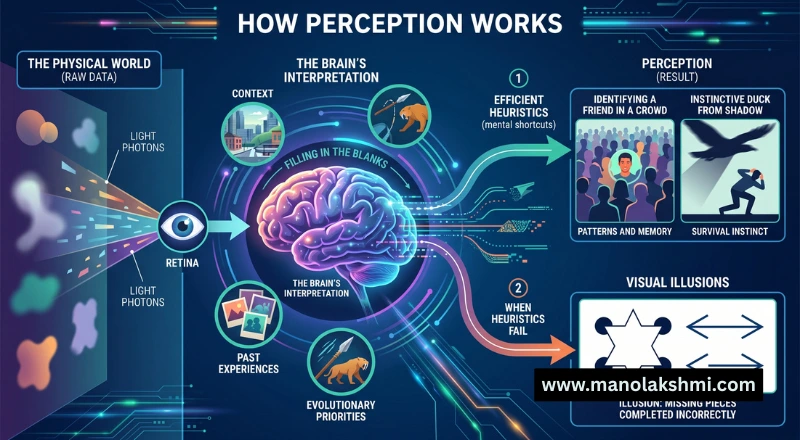
Perception is an act of interpretation. When light photons strike the retina, the brain doesn’t simply record an image; it fills in the blanks. It relies on context, past experiences, and evolutionary priorities to make sense of the visual field. This is why we can identify a friend in a crowded room or instinctively duck when a shadow passes quickly overhead.
However, this efficiency comes at a cost. To process information quickly, the brain takes “mental shortcuts”—heuristics that usually yield accurate results. But occasionally fail, leading to visual phenomena we call illusions.
The Brain’s Role in Sight
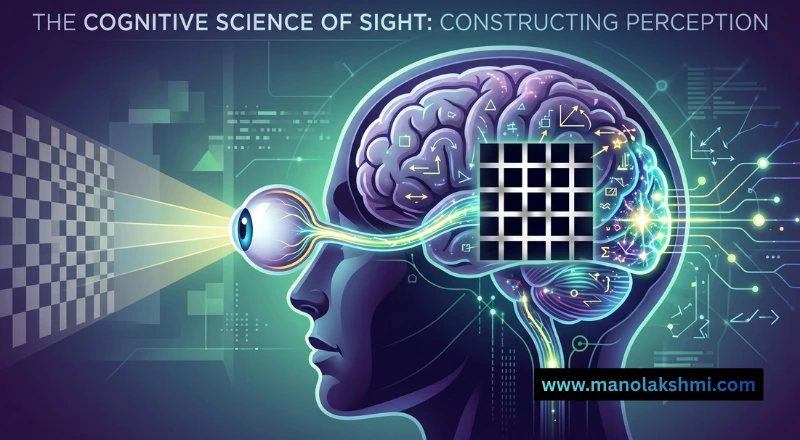
The brain is never truly “idle”. Even when we stare at a static image, the visual cortex is busy hunting for patterns, edges, and motion. It is constantly asking, “What is the most likely source of this light?” or “Is this object fixed or moving?”
When we observe an optical illusion, we are essentially catching the brain in the act of guessing. Whether it’s a grid that seems to shimmer or two lines of equal length appearing different, the brain is struggling to reconcile contradictory data. It is a testament to the cognitive science of sight: our reality is a collaboration between the eye and the grey matter behind it.
Mind Tricks & Visual Puzzles: 25 Questions and Answers
To test your visual perception and stretch your cognitive horizons, consider these 25 questions that delve into the mechanics of the mind.
The Phenomenon of Color and Contrast
Q: Why do some colours appear to change depending on the background?
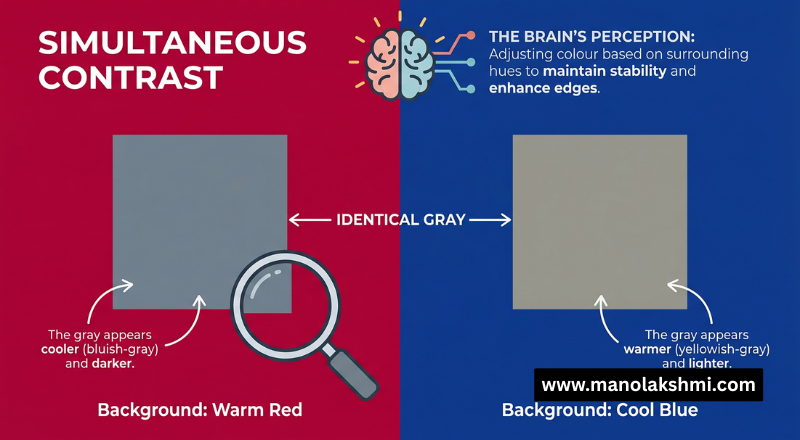
A: This occurs due to simultaneous contrast. The human brain does not perceive colours in isolation; instead, it adjusts colour perception based on surrounding hues to maintain stability and enhance the edges between different objects.
Q: What is the “Checker Shadow Illusion”?
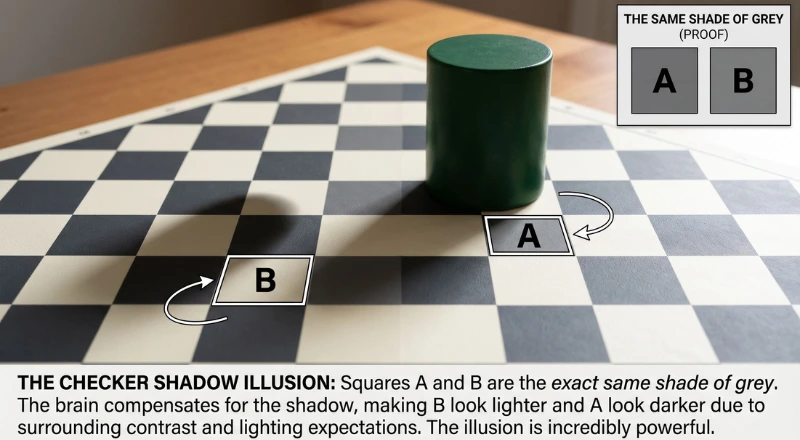
A: It is a classic visual puzzle where two squares of the exact same shade of grey appear to be different colours. This happens because the brain automatically compensates for a cast shadow, leading the observer to believe a square in the shadow must be lighter than it appears.
Q: Do we see colours in low light?
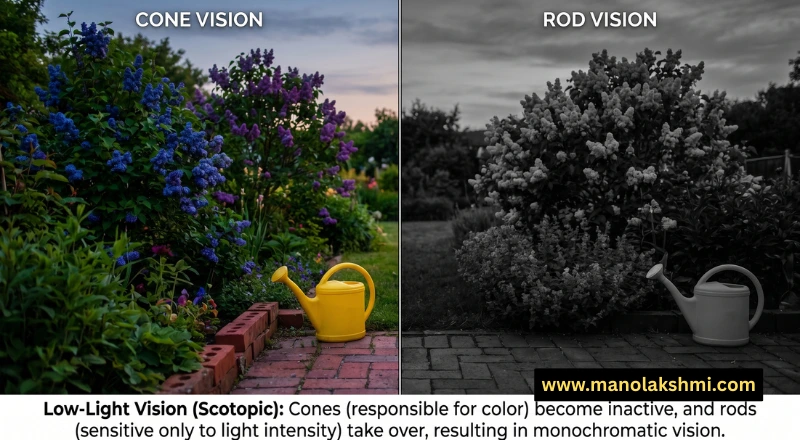
A: No. When light levels are low, the rods in our eyes—which are highly sensitive to light but cannot distinguish colour—take over from the cones, which are responsible for colour vision. Consequently, the world appears in various shades of grey.
Q: Why does a white object on a black background look brighter than on white?
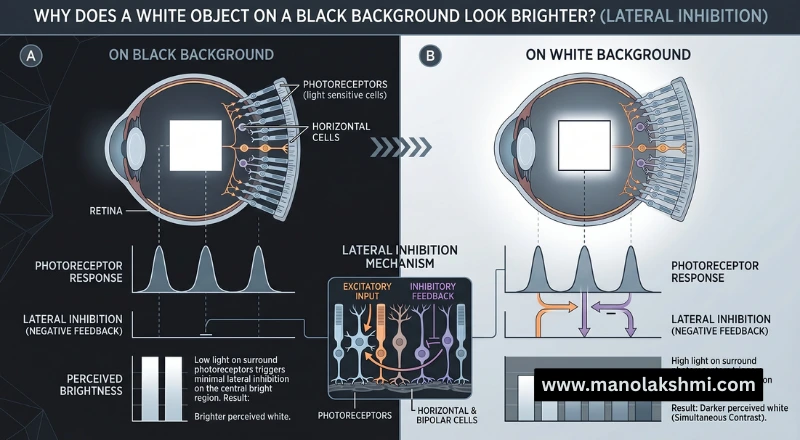
A: Lateral inhibition, where neurones suppress the activity of neighbouring neurones to sharpen edges.
Question: What is an afterimage, and how does it manifest in our vision?
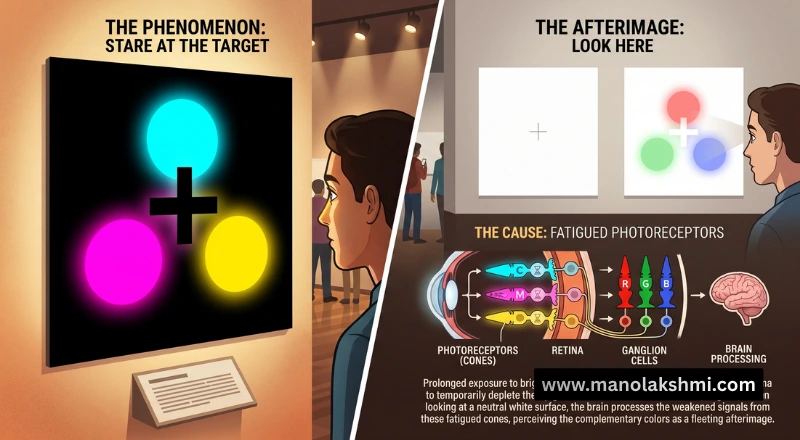
A: The “ghost” image remaining after staring at a bright colour, caused by fatigued photoreceptors.
Geometry and Perspective
Q: Why do parallel lines look like they converge in the distance?

A: Linear perspective; the brain uses these patterns to interpret depth.
Q: What is the “Müller-Lyer Illusion”?
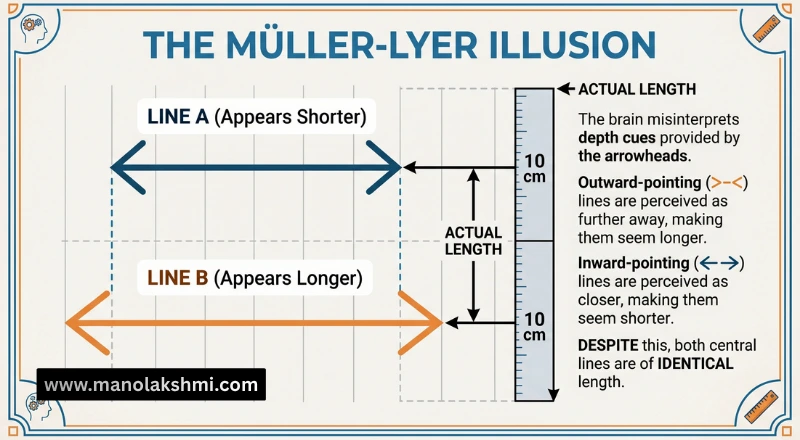
A: Two lines of equal length appearing different due to the direction of arrowheads at the ends.
Q: Why do objects seem larger when they are lower in the visual field?
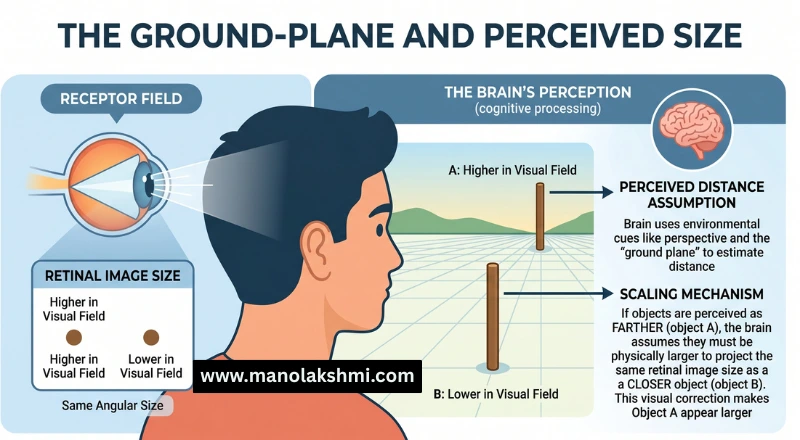
A: The brain assumes the “ground” is closer to the viewer.
Q: Can an impossible object (like the Penrose Triangle) exist in 3D?
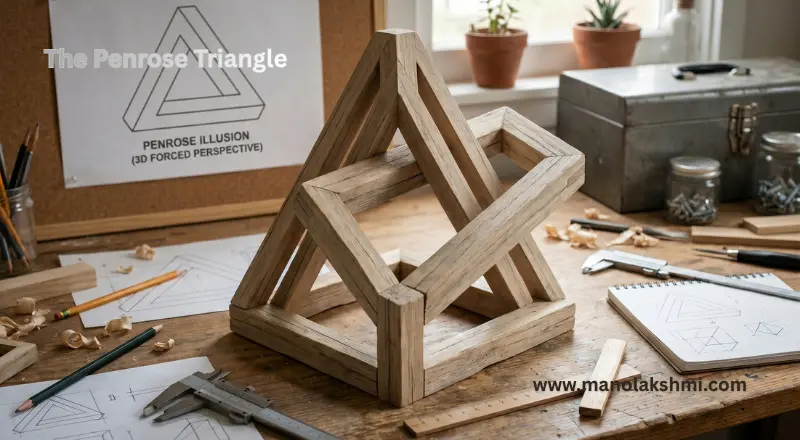
A: Only if the shape is viewed from a precise, forced perspective.
Q: How does an “Ames Room” trick the brain into changing size?
(optical Illusion)
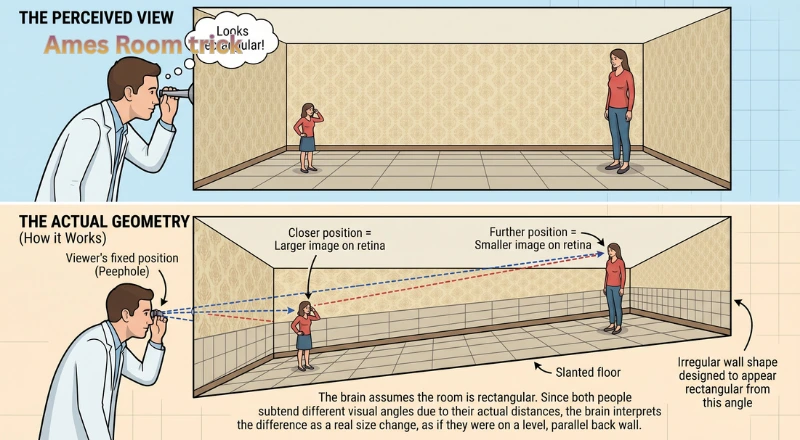
A: By using a distorted shape that looks rectangular from a single peephole, confusing the brain.
Motion and Stability (optical Illusion)
Q: Why do static images seem to rotate (peripheral drift)?
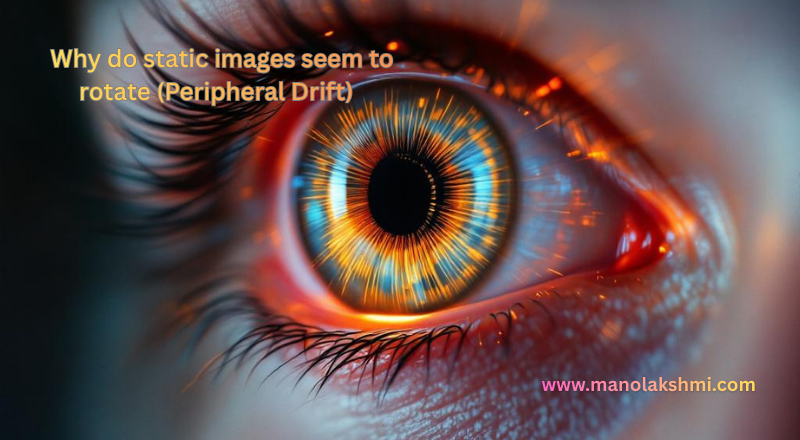
A: Micro-saccades—involuntary eye movements—create the sensation of subtle motion.
Q: What is “The Troxler Effect”?
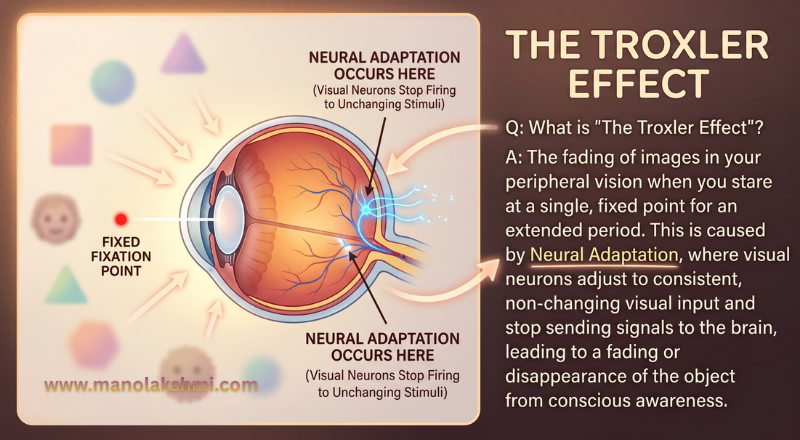
A: The fading of images when you stare at a fixed point for too long, caused by neural adaptation.
Q: Why does a spinning wheel sometimes appear to move backward?
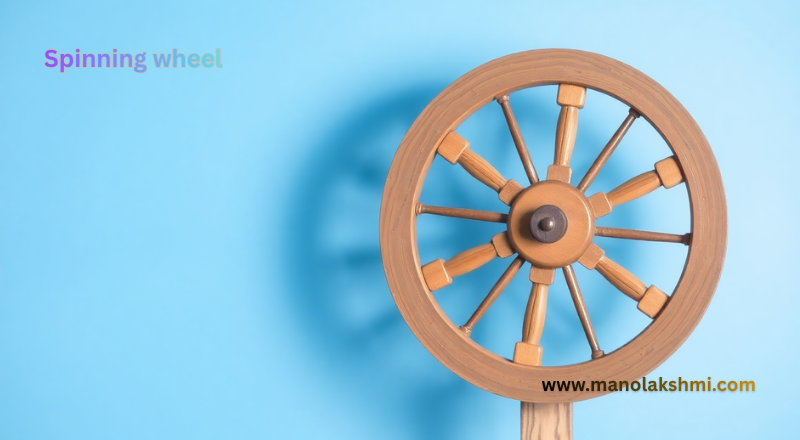
A: The waggon wheel effect, caused by the sampling rate of the eye.
Q: What creates the feeling of dizziness in spiralling illusions?
(optical Illusion)
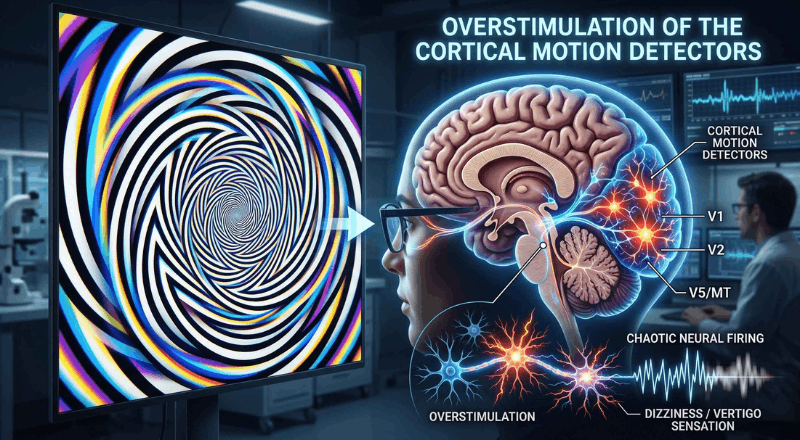
A: Overstimulation of the cortical motion detectors.
Q: Does the brain prioritise motion or colour?
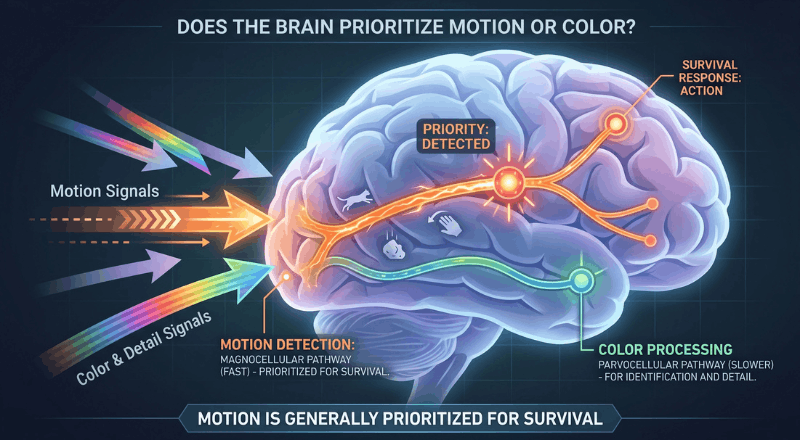
A: Generally, motion detection is prioritised for survival.
Depth and 3D Perception
Q: Why do 3D glasses work?
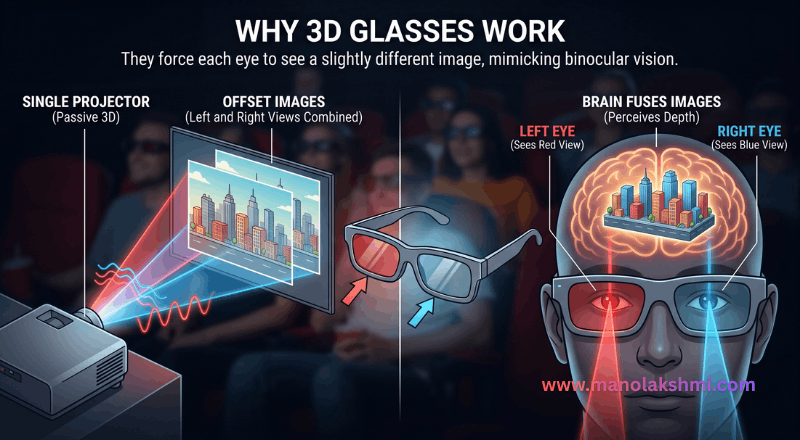
A: They force each eye to see a slightly different image, mimicking binocular vision.
Q: What is stereopsis?
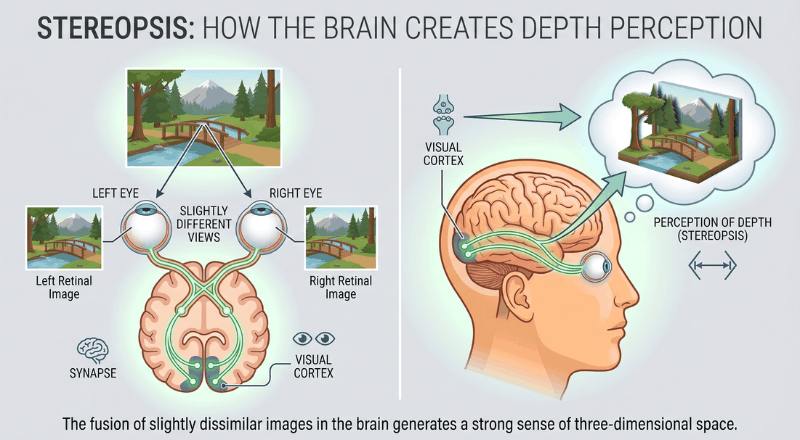
A: The perception of depth produced by the reception in the brain of visual information from both eyes.
Q: Why are we fooled by “Hollow Face” masks?
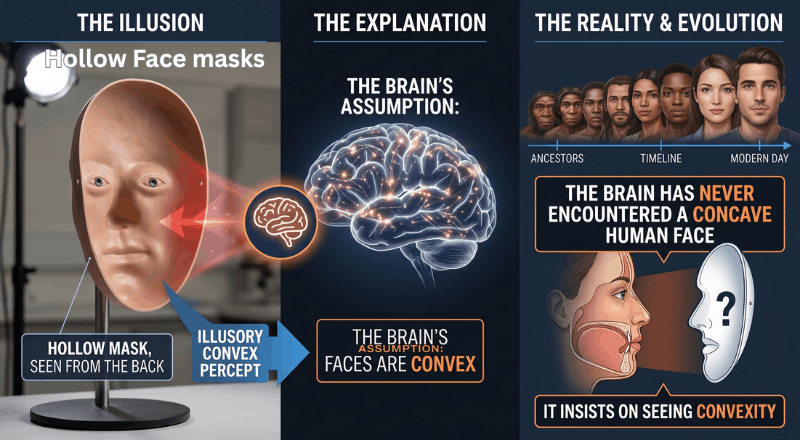
A: The brain insists on seeing a convex face because it has never seen a concave human face in reality.
Q: How do we perceive depth with only one eye?

A: Monocular cues like relative size, texture gradient, and occlusion.
Q: What is the Ponzo illusion?
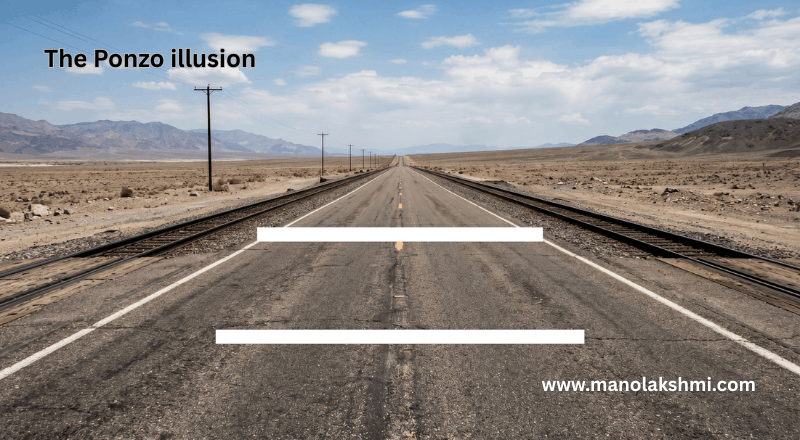
A: The illusion where two identical objects are placed between converging lines, making the further one look larger.
The Psychology of Seeing
Q: Why do we see faces in clouds (Pareidolia)?
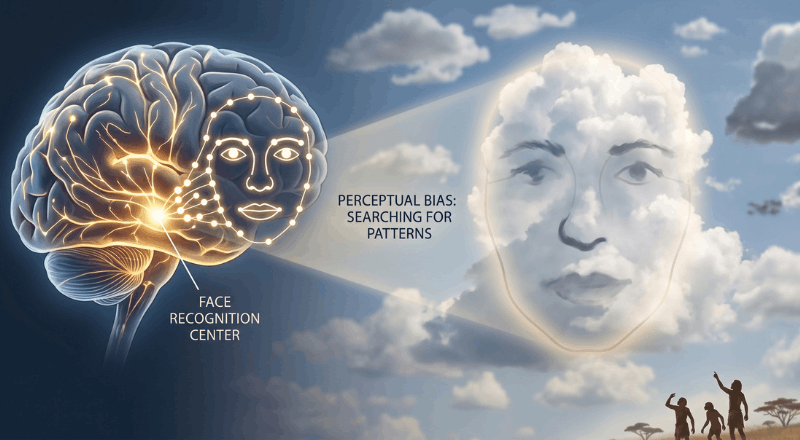
A: The brain is hardwired to identify social signals and facial structures for survival.
Q: Does personality affect what we see?
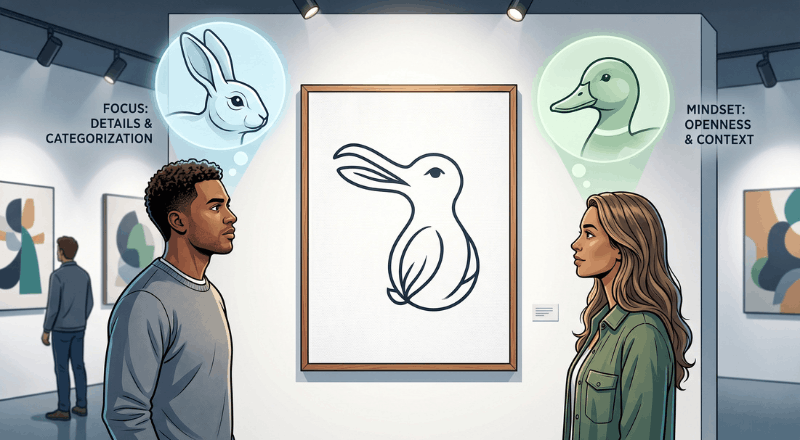
A: Yes; focus and mindset can change the interpretation of ambiguous images.
Q: How do optical illusions debunk “perfect sight”?
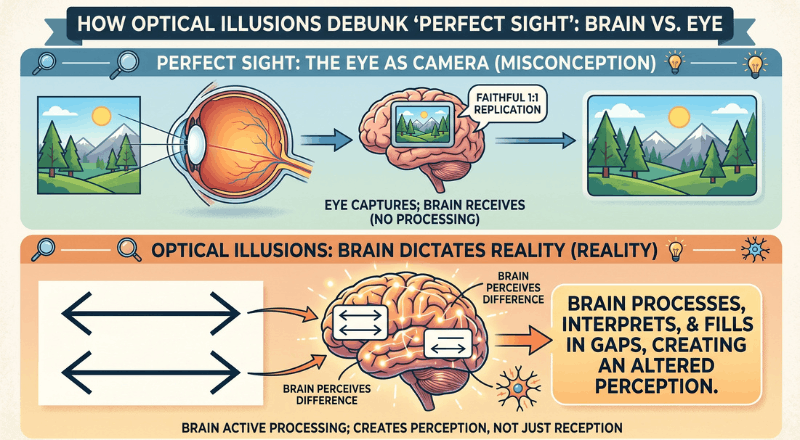
A: They demonstrate that the brain dictates reality, not the eye.
Q: What is “change blindness”?
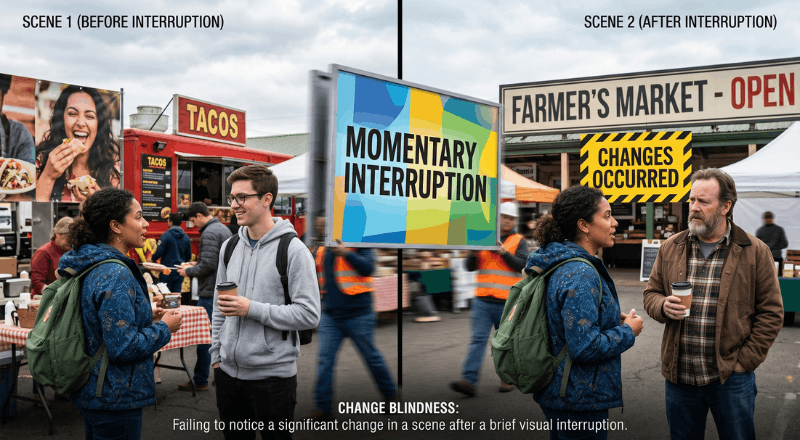
A: Being unable to notice a significant change in a scene because of a momentary interruption.
Q: Why are these puzzles so addictive?
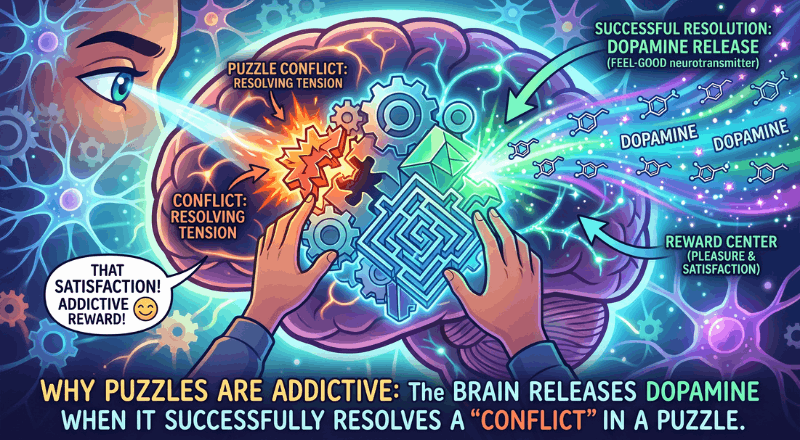
A: The brain releases dopamine when it successfully resolves a “conflict” in a puzzle.
Optical Illusions Explained: Closing Thoughts
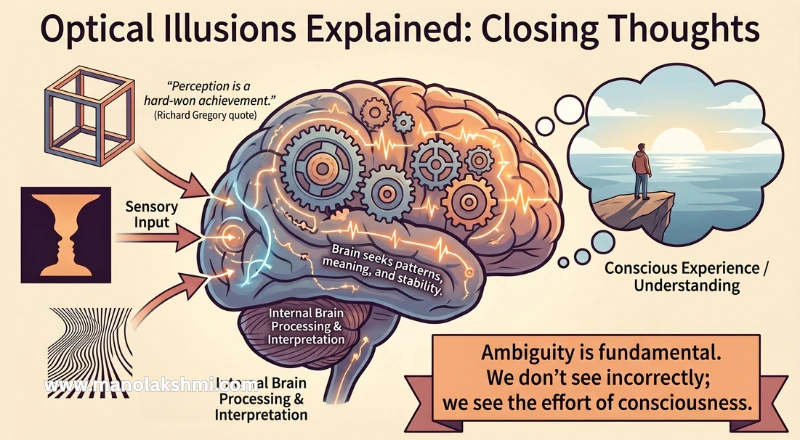
The study of optical illusions is more than just a diversion; it is a gateway into understanding the architecture of our own minds. As psychologist Richard Gregory once said, “Perception is a hard-won achievement.” Every time we solve a puzzle or recognise a trick, we are engaging with the very systems that allow us to perceive, understand, and interact with the physical world.
Encouragingly, these visual puzzles remind us that ambiguity is a fundamental part of the human experience. When we find ourselves confused by a shape or a colour, we aren’t “seeing incorrectly”; we are seeing the raw, unpolished effort of our brain trying to build a world it can understand. So, the next time you encounter an illusion, don’t just look—observe. You aren’t just looking at a clever drawing; you are witnessing the magnificent, fallible, and utterly fascinating machinery of your own consciousness at work.
Visit and support my telescopes page by clicking here.

Elevate your lifestyle with our curated content on technology, sports, travel, health, and fashion. Stay ahead of the trends and make informed choices.