The Science of Silicon Dioxide: How Quartz and Sand Shape Our World

From the wind‑swept dunes of the Sahara to the immaculately clean rooms where microchips are born, silicon dioxide—the humble compound of silicon and oxygen—serves as an unseen architect of modern civilisation. This ubiquitous mineral, most familiarly encountered as quartz and sand, is far more than a simple grain beneath our feet. Its unique atomic arrangement, remarkable stability, and versatile chemistry enable a spectrum of applications that span geology, industry, electronics, and cutting‑edge nanomaterials. In this comprehensive exploration, we uncover the science behind silicon dioxide, reveal why quartz properties have fascinated scientists for centuries, and trace its pivotal role in everything from glass manufacturing to the latest breakthroughs in silicon dioxide technology.
Understanding Silicon Dioxide
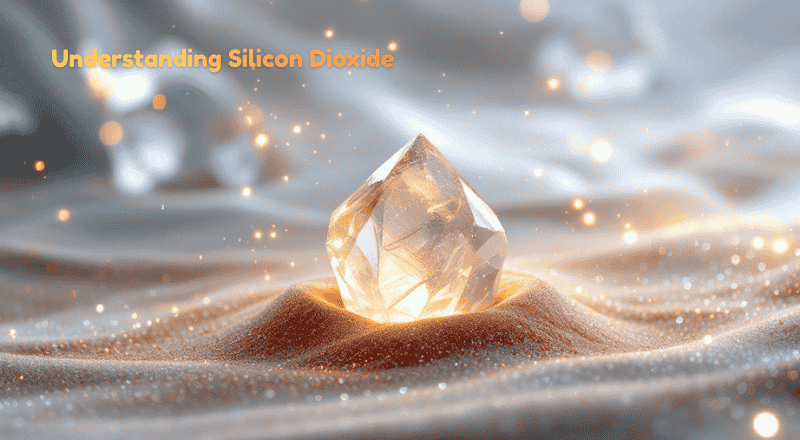
Silicon dioxide (SiO₂) is a covalent network solid composed of silicon atoms tetrahedrally coordinated to four oxygen atoms. This simple stoichiometry gives rise to a wide variety of structural forms. From the highly ordered crystals of crystalline silica to the disordered networks of amorphous silica. The most prevalent crystalline polymorph is α‑quartz, a member of the trigonal crystal system that exhibits piezoelectric and optical activity.
Key characteristics of silicon dioxide include:
- High thermal stability – it resists melting up to roughly 1,650°C.
- Chemical inertness – SiO₂ is insoluble in most acids and solvents, dissolving only in strong alkaline solutions or under hydrothermal conditions.
- Wide band gap – approximately 9 eV, making it an excellent electrical insulator.
- Mechanical hardness – quartz ranks 7 on the Mohs scale, ensuring durability in abrasive environments.
Silicon dioxide is an essential component in a wide range of fields, including construction, optics, and electronics, due to its remarkable inherent properties. Whether it appears as sand on a beach or as a high‑purity quartz crystal in a semiconductor fab. SiO₂’s versatility is rooted in its simple yet robust atomic network.
The Geological Wonders of Quartz

Geological quartz is the most abundant mineral in the Earth’s continental crust, constituting roughly 12% of the outer layer. Its formation occurs through diverse geological processes:
- Igneous origins – quartz crystallises from cooling magmas, especially in granitic and rhyolitic melts.
- Metamorphic recrystallisation – high‑pressure, high‑temperature conditions transform pre‑existing silica‑rich rocks into quartzite.
- Sedimentary accumulation – weathering of silicate rocks releases silica that settles as sand grains, eventually lithifying into sandstone.
The sand composition of most beaches is dominated by quartz because of its resistance to chemical weathering. Its hardness and lack of cleavage make it durable during transport, allowing it to accumulate in massive dune fields and riverbeds worldwide.
Quartz properties such as piezoelectricity—the ability to generate an electric charge under mechanical stress. Moreover, the crystal’s optical clarity enables its use in spectroscopy, lenses, and laser components.
Industrial Applications of Silica

The silica used, derived from quartz and sand, extends far beyond the construction industry. Sand serves as the main material for concrete and asphalt. While high-purity quartz is processed for advanced technology products.
- Abrasives – finely ground quartz serves as sandpaper, blasting media, and polishing compounds.
- Filtration – silica sand filters remove particulates in water treatment and in the beverage industry.
- Foundry sands – the high thermal stability of quartz makes it ideal for moulding metals.
- Ceramics and refractories – silica is a key component in bricks, tiles, and high‑temperature furnace linings.
- Additives – in paints, plastics, and rubber, silica improves durability, viscosity, and UV resistance.
These industrial applications of quartz demonstrate how a mineral abundant in nature becomes a critical input for manufacturing, infrastructure, and environmental stewardship.
Quartz in Semiconductor Technology

In the realm of electronics, silicon dioxide is nothing short of revolutionary. As a semiconductor material, ultra‑pure quartz serves as the source of silicon wafers. The thin slices of crystalline silicon that form the substrate for integrated circuits. Purifying silicon requires exacting quartz chemistry. Quartz crystals are melted in a quartz crucible and pulled into a single crystal via the Czochralski process.
A thin layer of silicon dioxide deposited on a prepared silicon wafer serves as an insulating gate dielectric controlling electron flow in transistors. This technology underpins Moore’s Law scaling, enabling billions of transistors on a single chip. SiO₂’s high permittivity, excellent insulation, and conformal layer formation remain unmatched. Though high‑k dielectrics are being explored to continue miniaturisation.
Quartz components, including quartz crystal oscillators, provide precise timing signals to synchronise digital circuits. The stability of crystalline silica against temperature fluctuations ensures that clocks in smartphones, computers, and telecommunications equipment maintain accurate timekeeping.
Glass Manufacturing Essentials (silicon dioxide)
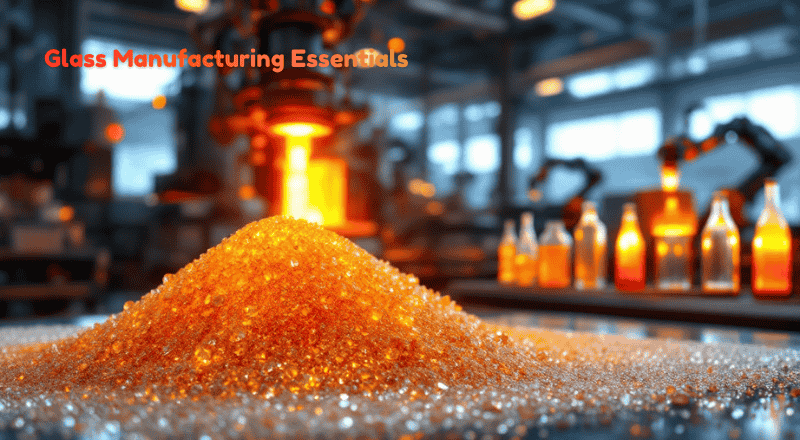
Glass manufacturing is perhaps the most iconic use of silica. The use of silica in glass dates back to ancient civilisations. Where sand rich in quartz was melted to produce vessels and windows. Modern glass production relies on silicon dioxide. As the principal network former, typically comprising 60–80% of the final composition.
Soda-lime glass, the most common type used in bottles and windows, combines silica with sodium oxide (Na₂O) and calcium oxide (CaO) to lower the melting temperature.
- Borosilicate glass – adding boric oxide (B₂O₃) yields a glass with low thermal expansion, ideal for laboratory equipment and cookware.
- Quartz glass (fused silica) – produced by melting high‑purity quartz at >2,000 °C, this material exhibits exceptional optical transmission from UV to IR and extreme thermal shock resistance, making it indispensable for optical fibres, lenses, and spacecraft windows.
The glass manufacturing process shows how silicon dioxide transforms. A grain is a material that transmits light, holds liquids, and withstands heat.
Innovations in Nanotechnology

The past two decades have seen nanotechnology materials propelled by the unique behaviour of silica at the nanoscale. With high surface areas, tunable pore sizes, and biocompatibility, silica nanoparticles and mesoporous silica (e.g., MCM‑41 and SBA‑15) advance medicine, catalysis, and sensing.
- Drug delivery – silica nanoparticles can be functionalised to carry therapeutic agents. Releasing them in a controlled manner within the body.
- Sensors – changes in the refractive index of silica nanocoatings enable highly sensitive detection of gases, chemicals, and biological markers.
- Photonic devices – silicon dioxide photonic crystals guide light with minimal loss, facilitating advances in integrated photonics and quantum communication.
The quartz chemistry at the nano-level also reveals fascinating mechanical properties. A phenomenon exploited in flexible electronics. As researchers continue to manipulate silicon dioxide at dimensions measured in billionths of a metre. The boundaries of what is possible in computing, energy, and medicine are ever-expanding.
Material Science and Future Trends

The discipline of materials science continually uncovers new avenues for silicon dioxide technology. Current research focuses on several frontiers:
- High‑k dielectrics – integrating alternative oxides (e.g., hafnium oxide) with SiO₂ to further reduce leakage currents in transistors.
- Silicon‑on‑insulator (SOI) substrates – a layer of SiO₂ sandwiched between a thin silicon film and a bulk silicon handle, enhancing performance and reducing power consumption.
- Sustainable glass production – developing batch formulations that recycle waste glass and reduce the carbon footprint of glass manufacturing.
- Quantum computing – ultra‑pure quartz cavities serve as resonators for superconducting qubits, leveraging the material’s low loss at microwave frequencies.
- Biocompatible implants – amorphous silica is being investigated for bone grafts and dental composites. Where its osteoconductive properties promote tissue integration.
As the demand for faster, greener, and more resilient technologies grows. Silicon dioxide will likely evolve from a passive insulator to an active functional component. The interplay between crystalline and amorphous forms of silica, coupled with advances in nanotechnology, positions SiO₂. As a material capable of meeting the challenges of tomorrow’s semiconductor, energy, and biomedical industries.
Conclusion

From the ancient sands that built the first glass vessels to the ultra‑pure quartz layers that enable today’s most sophisticated microprocessors, silicon dioxide stands as a testament to the profound impact of simple chemistry on human progress. Its quartz properties, silica uses, and multifaceted industrial applications of quartz illustrate a material that is both timeless and continually reinvented. As researchers push the limits of silicon dioxide science, unlocking new possibilities in nanotechnology, semiconductor materials engineering, and glass manufacturing. The world can expect even more innovative uses for the mineral that literally lies beneath our feet.
In the grand narrative of materials, silicon dioxide is not merely a grain of sand—it is the foundation upon which modern technology rests, a building block that continues to shape our world in ways both seen and unseen.
Click here to please visit our page: Thermal Management: Heatsinks, Fans, and Liquid Cooling

Elevate your lifestyle with our curated content on technology, sports, travel, health, and fashion. Stay ahead of the trends and make informed choices.