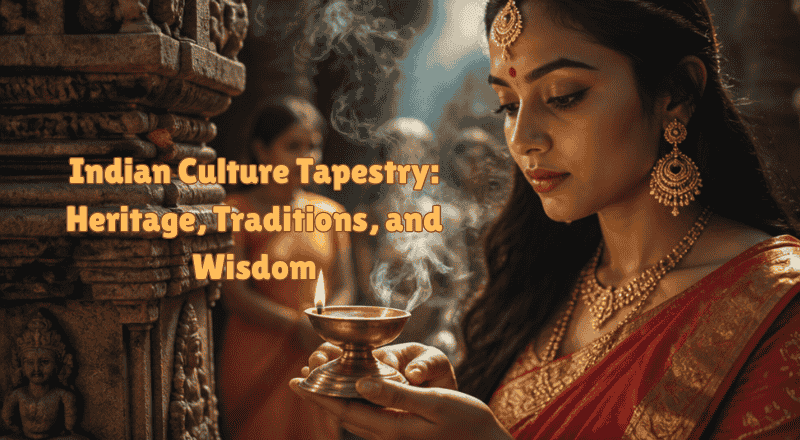
Discover the Indian culture tapestry—explore its ancient roots, vibrant festivals, sacred customs, enduring values, and incredible heritage.
While modern convenience often replaces ancient wisdom, India remains a remarkable testament to the enduring power of cultural heritage. In its aromatic streets, vibrant festivals, and persistent traditions, the past and present harmonize beautifully. For millennia, this timeless dance has captivated travellers, scholars, and curious minds alike.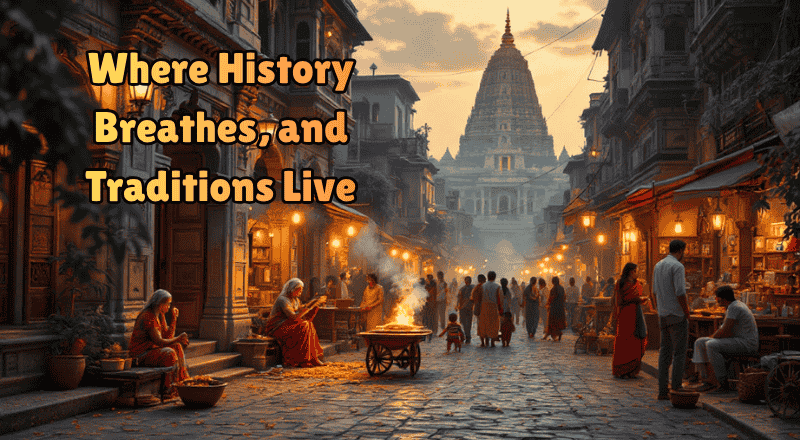
Indian culture offers endless discovery for those exploring a civilization that profoundly shaped mathematics, spirituality, art, and philosophy. Spanning from the northern Himalayas to southern Kerala, and from bustling cities to serene villages. India’s diverse culture forms a magnificent mosaic where each unique piece contributes to a greater whole.
This blog explores India’s remarkable cultural legacy—its ancient roots, vibrant festivals, sacred customs, values, and fascinating facts. Whether you are a student, a traveler, or simply curious about the traditions shaping over 1.4 billion lives. This journey illuminates the depth and beauty of an extraordinary heritage.
- Ancient Roots of Indian Heritage
- The Mathematical and Astronomical Legacy of Ancient India: Foundational Concepts of Global Thought
- The Spiritual Heritage of India and Vedic Traditions
- Vibrant Tapestry of Festivals
- Diwali: The Festival of Lights
- Holi: The Festival of Colours
- Onam: The Harvest Festival of Kerala
- Pongal in Tamil Nadu
- Pongal in Tamil Nadu
- Durga Puja: A Celebration of Devotion and Artistry
- Sacred Customs and Rituals
- Namaste: A Universal Gesture of Indian Custom and Spirituality
- The Indian Tradition of Fasting: Vrata
- Sanskara: The Sacred Life-Cycle Rituals of Indian Tradition
- Cremation Rites and Death as a Transition
- Values Shaping the Indian Lifestyle
- Exploring Cultural Diversity (India’s Culture)
- Fascinating Facts About Incredible India
- Preserving Traditions for Future Generations (Indian Culture)
- Conclusion: A Living Heritage Inviting Exploration (Indian Culture)
Ancient Roots of Indian Heritage
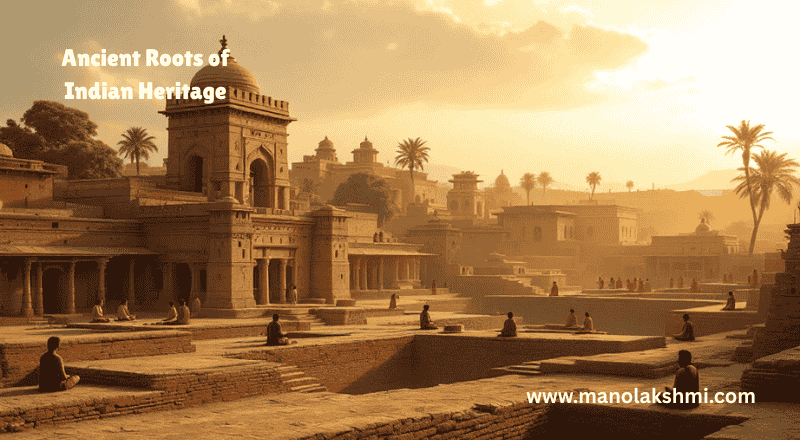
The Dawn of Indian Culture: The Indus Valley Civilisation
The story of Indian culture is deeply rooted in antiquity, emerging from the mists of time itself with one of the world’s earliest and most influential societies. Known as the Indus Valley Civilization, it flourished around 3300–1300 BCE in what is now Pakistan and northwestern India. This ancient civilization stands proudly as one of the world’s three earliest urban cultures, alongside Mesopotamia and Egypt.
This culture’s urban magnificence was epitomized by its gleaming cities, Harappa and Mohenjo-daro, which showcased remarkable planning and highly sophisticated drainage systems.
Beyond their architectural accomplishments, the people of this civilization utilized standardized weights and measures and established what appears to be one of the world’s earliest decimal systems.
The Mathematical and Astronomical Legacy of Ancient India: Foundational Concepts of Global Thought
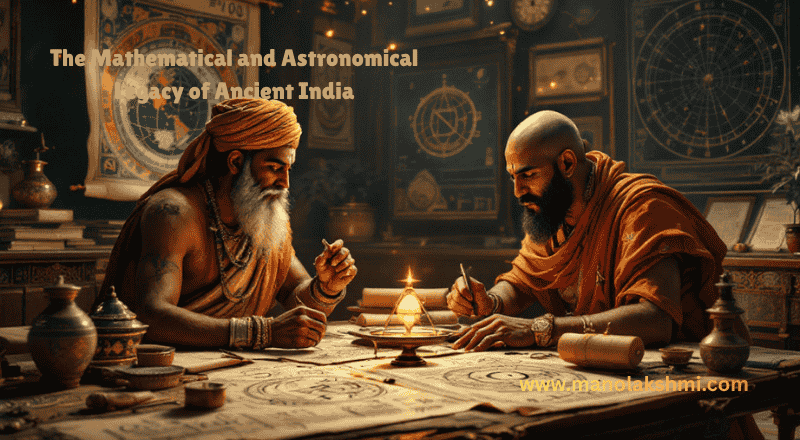
The true genius of ancient India extends far beyond its remarkable architectural achievements. It was within the Indian subcontinent that foundational concepts emerged, creating a profound legacy that would shape human thought and global understanding for millennia. This intellectual revolution was particularly evident in the fields of mathematics and astronomy, where ancient scholars laid the groundwork for principles that continue to govern modern science and arithmetic.
The Blossoming of Mathematics and the Decimal System
Mathematics blossomed extraordinarily in ancient India. Scholars in the region were responsible for developing the concept of zero and the decimal system, introducing foundational principles that would later completely revolutionize global mathematics. These breakthrough concepts provided human thought with new analytical tools, forever transforming. The way numerical calculations and mathematical inquiries are conducted across the world.
Aryabhata’s Celestial Calculations
In the realm of astronomy, the subcontinent produced thinkers of towering intellect. The renowned astronomer Aryabhata made monumental contributions to our understanding of the cosmos. He calculated the Earth’s rotation around its own axis and approximated pi, demonstrating a sophisticated mastery of both astronomical observation and geometric principles.
Brahmagupta and the Rules of Zero
Building upon these mathematical foundations, the brilliant mathematician Brahmagupta established definitive rules for working with zero. His systematic formulations and mathematical guidelines established the very basis of modern arithmetic. By defining how zero functions in mathematical operations, Brahmagupta’s rules ensured that the concept of zero would transition into a functional cornerstone of global mathematics.
The Spiritual Heritage of India and Vedic Traditions
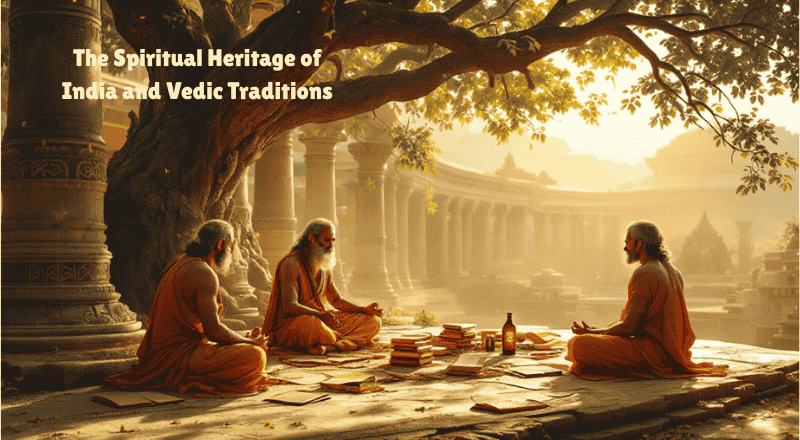
The spiritual heritage of India stretches back into the ancient past. The Vedic traditions, with their rich corpus of hymns, rituals, and philosophical inquiries, gave birth to Hinduism—one of the world’s oldest continuously practiced religions.
Foundational Concepts Influencing Global Thought
These texts, composed over several centuries beginning around 1500 BCE, introduced concepts that would influence global thought:
- Dharma: Duty and righteousness.
- Karma: Action and consequence.
- Moksha: Liberation.
The Upanishads and Philosophical Enquiries
The Upanishads, concluding portions of the Vedic literature, posed profound philosophical questions. About the nature of reality, self, and consciousness that continue to inspire seekers worldwide.
India is the cradle of humanity, the birthplace of language, and the mother of history and tradition. — Mark Twain.
The Rise of Buddhism and Jainism: Reform Movements of the Ancient Period
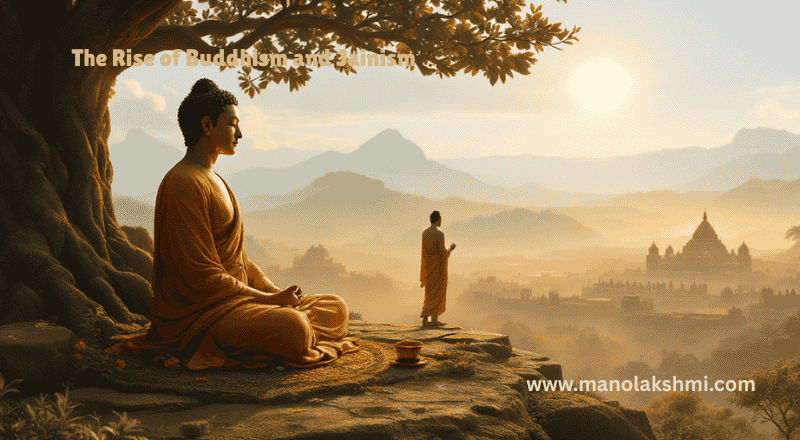
The ancient period also saw the rise of Buddhism and Jainism—reform movements that emphasized spirituality, non-violence, and the pursuit of enlightenment. These movements introduced a profound spiritual awakening across the Indian subcontinent. Challenging existing traditions by focusing on moral righteousness and inner peace.
Gautama Buddha and the Global Spread of Enlightenment
The foundational teachings of Gautama Buddha, who was born in what is now Bihar, India, became a cornerstone of this spiritual revolution. His profound message of compassion and mindfulness would eventually spread across Asia. Transcending geographical borders to influence millions of followers worldwide over subsequent centuries.
Emperor Ashoka and the Philosophy of Peace
Emperor Ashoka’s embrace of Buddhism after the Kalinga War around 261 BCE marked a truly pivotal moment in Indian history. Moved by the conflict, he renounced aggressive expansion, transforming warfare into an enduring philosophy of peace, compassion, and moral governance that reshaped the administration of his empire.
Vibrant Tapestry of Festivals
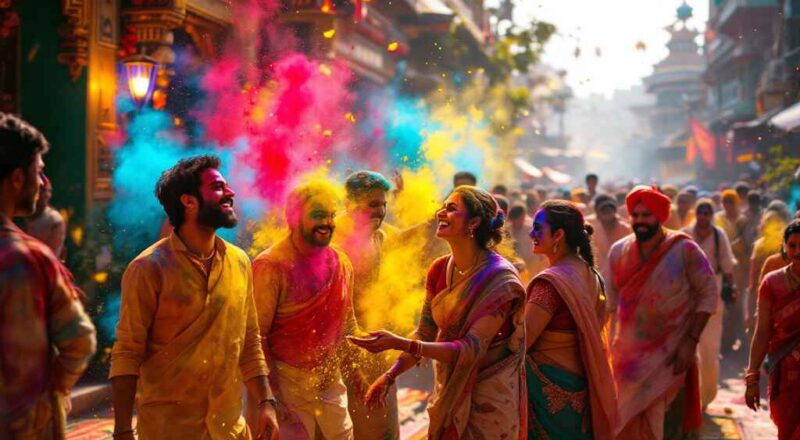
If there is one aspect of Indian culture that captures global imagination. It is undoubtedly the spectacular festivals that punctuate the Indian calendar. These celebrations are not merely holidays—they are living expressions of the country’s spiritual beliefs, agricultural heritage, and collective identity. The cultural diversity of India unfolds most vividly during these festivals, where different regions and communities display their unique traditions while sharing in universal joy.
Diwali: The Festival of Lights
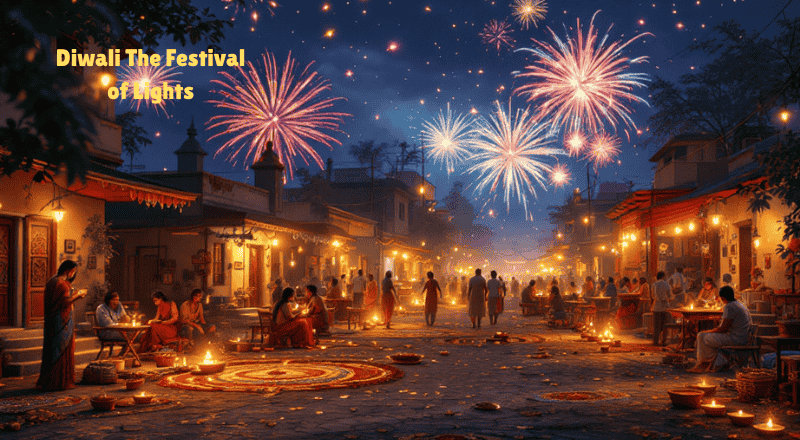
Diwali, the Festival of Lights, stands as perhaps the most widely recognized Indian celebration. This grand five-day celebration transforms the nation of India into a beautifully luminous wonderland.
The Return of Lord Rama
The historical core of this festival marks the triumphant return of Lord Rama to Ayodhya after completing fourteen years of exile, serving as the foundational narrative for the nationwide festivities.
Celebratory Traditions and Visuals
The celebration is filled with rich traditions where homes glow with traditional oil lamps (diyas), and intricate, colorful rangoli patterns adorn doorsteps. Families regularly gather for festive meals, and the night sky blossoms with brilliant fireworks.
Spiritual Significance and Inner Illumination
Beyond the grand visual spectacle, Diwali carries deep spiritual significance. Celebrating the victory of light over darkness, good over evil, and knowledge over ignorance. It serves as a vital time for reconciliation, forgiveness, and fresh beginnings, embodying it. The profound truth that inner illumination matters as much as external decoration.
Holi: The Festival of Colours
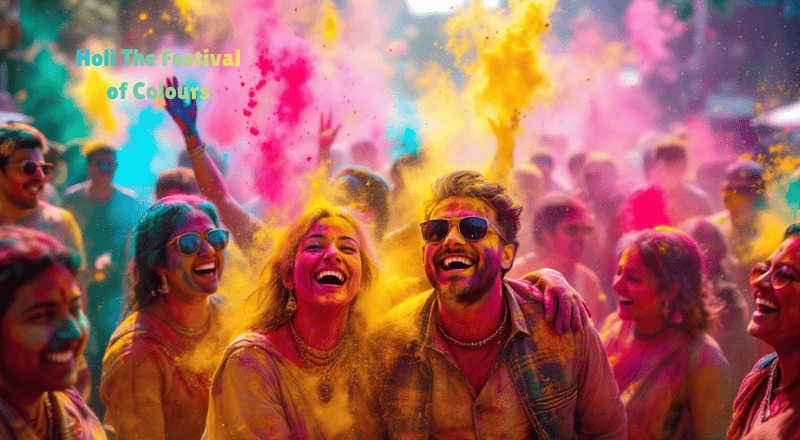
Holi, the Festival of Colors, celebrates the arrival of spring and the triumph of good over evil in a uniquely joyful manner. On this day, social boundaries dissolve as people of all ages and backgrounds splash each other with vibrant powders and water, dancing to traditional music and sharing festive sweets. The evening before Holi, bonfires crackle as communities gather to burn symbolic effigies, recalling the legend of Holika’s defeat. The message is beautiful in its simplicity: life should be embraced with color, joy, and the willingness to let go of the past.
The Arrival of Spring and Triumph of Good
Holi celebrates the arrival of spring and the triumph of good over evil in a uniquely joyful manner.
Celebratory Traditions and Social Dissolution
On this day, social boundaries dissolve as people of all ages and backgrounds splash each other with vibrant powders and water. The celebrations are filled with dancing to traditional music and sharing festive sweets.
The Holika Bonfires
The evening before Holi, bonfires crackle as communities gather to burn symbolic effigies, recalling the legend of Holika’s defeat.
Spiritual Message and Renewal
The message of the festival is beautiful in its simplicity: life should be embraced with color, joy, and the willingness to let go of the past.
Onam: The Harvest Festival of Kerala
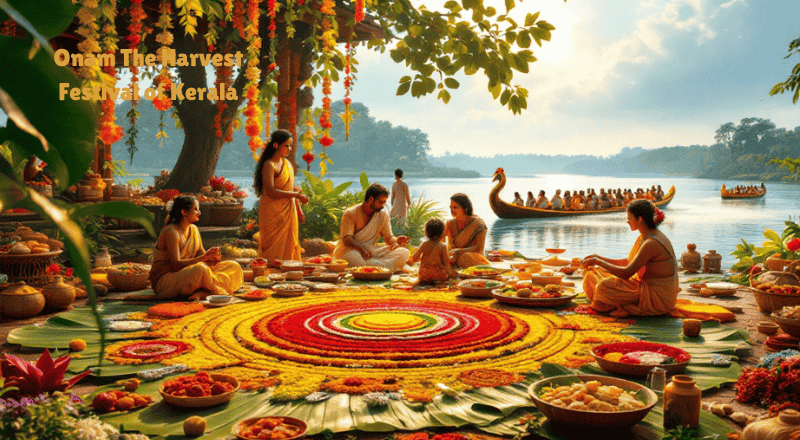
The southern state of Kerala celebrates Onam, a harvest festival that transforms the region into a sea of flowers and tradition.
The Grand Onam Sadya
The highlight of this ten-day celebration is the grand Onam Sadya—a vegetarian feast served on banana leaves featuring over 26 dishes.
Celebratory Traditions and the Snake Boat Race
Families decorate elaborate flower carpets (pookkalam), and the famous Snake Boat Race (Nedumudi Thampi) draws thousands of spectators to the serene backwaters.
The Legend of King Mahabali
Onam celebrates the mythical golden age of Kerala under the reign of King Mahabali. A period of prosperity and equality that the Malayali people remember with great cultural pride.
Pongal in Tamil Nadu
Pongal in Tamil Nadu
Agricultural Heritage and Significance
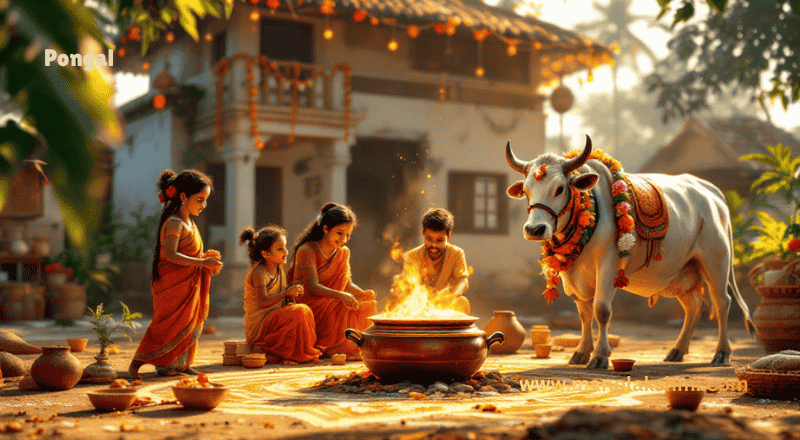
Pongal in Tamil Nadu offers another window into India’s agricultural heritage. This four-day harvest festival honors farmers’ appreciation for nature and the farm animals that help make cultivation possible.
The Special Dish and Symbolism
The highlight comes when families prepare a special dish also called ‘pongal’—rice cooked with milk and jaggery in new clay pots until it overflows, symbolizing abundance and prosperity.
Celebratory Traditions and Visuals
The sight of beautifully kolamed (decorated) homes and cows adorned with garlands during Pongal captures the deep connection between Indian culture and the land that sustains it.
Durga Puja: A Celebration of Devotion and Artistry
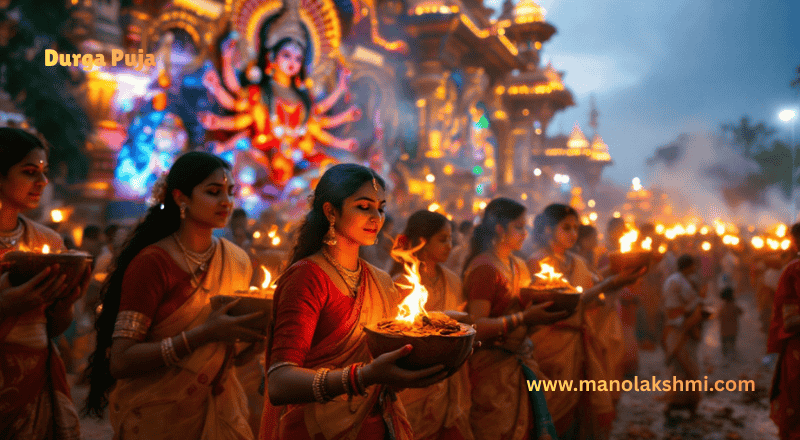
Bengali communities enrich India’s festival calendar with Durga Puja, a nine-day celebration honoring the goddess Durga.
Elaborate Pandals and Artistic Depictions
The festival is renowned for its elaborate pandals (temporary structures) showcasing artistic depictions of the goddess.
Rhythmic Dance and Devotional Honour
A central element of the celebration is the rhythmic dhunuchi nach dance performed to honor the divine mother.
The Final Immersion Procession
The immersion procession on the final day completes the celebration, creating an experience that blends devotion, artistry, and community participation in unforgettable ways.
What strikes observers most is how these festivals transcend religious boundaries. During Diwali, families of different faiths exchange sweets. During Holi, entire neighborhoods become unified in joyful abandon. These celebrations demonstrate that Indian festivals serve not merely as religious observances but as social glue binding communities together in shared experience and common joy.
Sacred Customs and Rituals
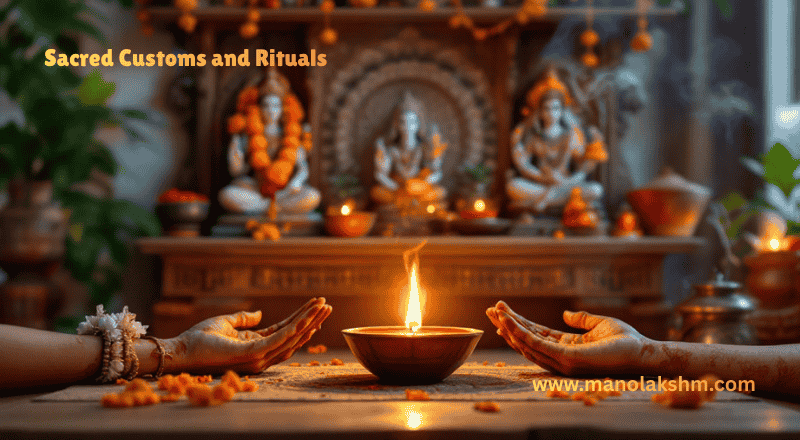
Beyond the spectacular public celebrations, Indian culture is woven through with daily customs and rituals that provide structure, meaning, and connection to the sacred. These traditions, far from being archaic remnants of the past, continue to inform the daily lives of millions and offer profound insights into a civilization that has always sought to infuse the ordinary with the extraordinary.
Namaste: A Universal Gesture of Indian Custom and Spirituality
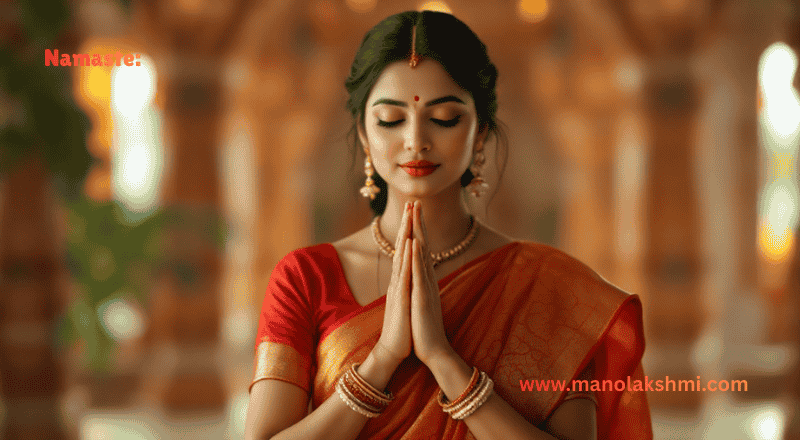
“Namaste” stands as perhaps the most universally recognized Indian gesture, perfectly encapsulating the respectful nature of Indian customs.
The physical action of pressing the palms together at the chest with a slight bow is far more than a mere greeting. This gesture fundamentally acknowledges the divine spark residing within each person. Serving as a profound recognition that every individual carries sacred potential.
In an often impersonal contemporary world, this simple gesture reminds us to recognize and honor the core humanity and spirituality in every encounter.
The practice of pooja (worship) varies across regions and households but maintains a common thread of devotion and ritual. Whether performed daily in home temples or during special occasions at grand temples, puja involves several core elements to establish a sacred space where practitioners connect with the divine:
- Offerings to Deities: The practice involves making offerings to deities, which include flowers, incense, food, and light.
- Chanting of Mantras: Practitioners participate in the chanting of mantras.
- Creation of a Sacred Space: A dedicated sacred space is created to allow practitioners to connect directly with the divine.
To fully engage the body, mind, and spirit during worship, several specific ritual actions are completed:
- The ringing of bells.
- The circling of sacred flames (aarti).
The completion of specific mudras (hand gestures).
The Indian Tradition of Fasting: Vrata
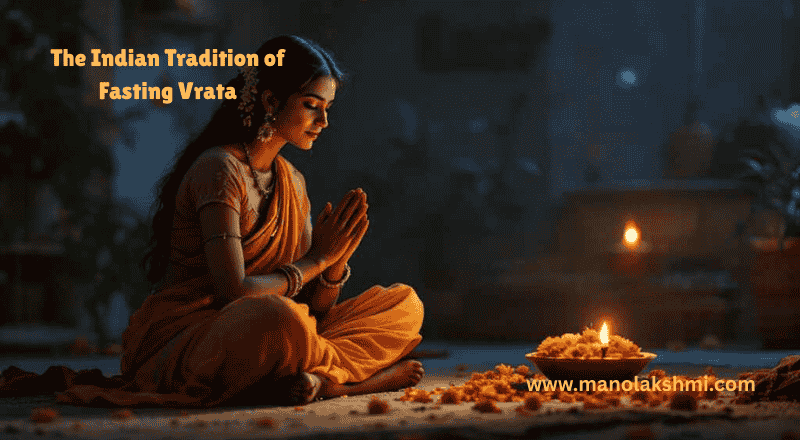
The Indian tradition of fasting, known as vrata, forms a captivating part of cultural life. Far from being regarded merely as dietary restrictions. These fasts are observed as profound acts of devotion, self-discipline, and spiritual purification.
Observance During Festivals
This cultural practice becomes particularly prominent during festivals like Navratri, where many observers maintain their daily routines while fasting, choosing to break their fast only after performing a specific puja.
The Philosophy of Simplified Living
The underlying belief of a Vrata is centered on the concept of simplified living. By consciously reducing food, speech, and sensory engagement, practitioners create a sacred space that allows for deeper spiritual connection and meaningful self-reflection.
Sanskara: The Sacred Life-Cycle Rituals of Indian Tradition
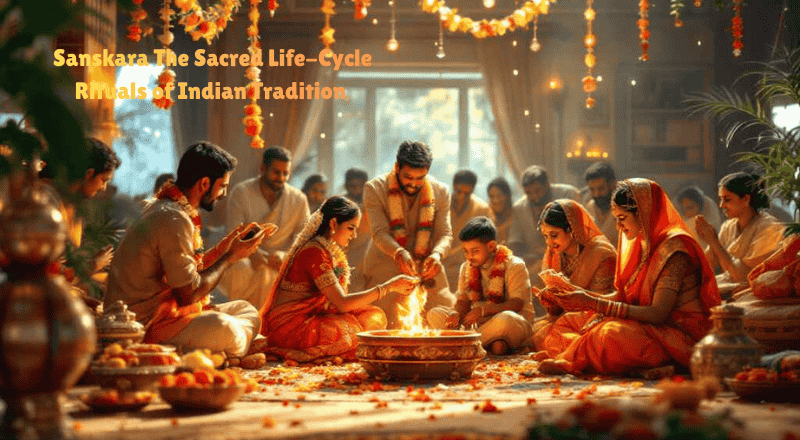 The concept of sanskara, representing the vital life cycle rituals, serves as a profound framework for understanding the various stages of an individual’s journey. These customs meticulously mark significant transitions, guiding a person through life with deep cultural and spiritual meaning.
Key Ceremonies: From Identity to Education
Among these critical transitions, the naming ceremony, known as Namkaran, stands as the initial milestone where a child formally receives their unique identity within the community. This is later followed by the thread ceremony. (or) Upanayanam, a major ritual that marks a child’s educational initiation and the formal commencement of their learning journey.
The Sacred Bond of Marriage
The journey transitions into marriage rituals. Which are designed to bind not just two distinct individuals but also more. But also to unite two entire families together. Indian weddings are celebrated for their lively, multi-day festivities. Where every single ritual carries a unique symbolism deeply tied to fertility, prosperity, and the enduring, lifelong connection between the couple.
Atithi Devo Bhava: The Spiritual Principle of Hospitality
In Indian culture, the core philosophy of hospitality is beautifully captured by the idea of ‘Atithi Devo Bhava,’ a phrase meaning that the guest is regarded as God. This traditional practice reflects a deep-rooted history of warm and generous hospitality that extends far beyond mere social courtesy, standing instead as a fundamental spiritual principle.

Within these traditions, the practice of todling (applying tilak or sindur) carries deep marital significance. Married Hindu women often wear red vermillion (sindoor) along the parting of their hair and a mangalsutra (a sacred necklace). As symbols of their marital status, openly expressing their commitment and wishing for good fortune. These customs, while seemingly ornamental to outsiders, represent profound commitments in a culture that views marriage as not just a social contract but a sacred alliance.
Cremation Rites and Death as a Transition
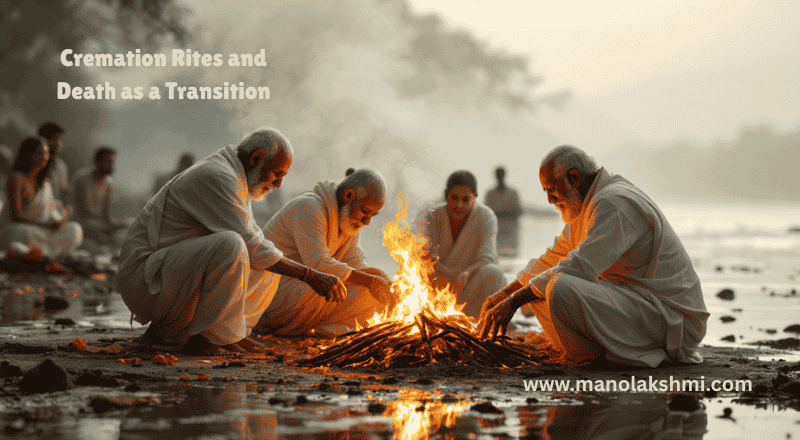
Family rituals around death, particularly the cremation rites and subsequent memorial ceremonies, demonstrate how Indian culture perceives death not as an ending but as a transition.
The Belief in Rebirth and Reincarnation
The belief in rebirth (reincarnation) shapes how communities process loss, viewing death as a passage rather than a conclusion.
Shraddha and Intergenerational Connections
Annual rituals commemorating the departed (Shraddha) keep the memory of ancestors alive, reinforcing the intergenerational connections that define Indian family structures.
Values Shaping the Indian Lifestyle
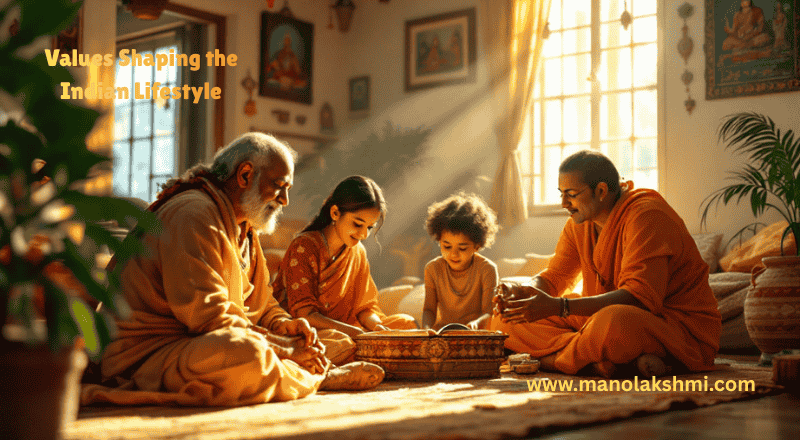
Beneath the rituals and festivals lies a framework of values that has guided Indian society for millennia. These principles, derived from religious texts, philosophical traditions, and accumulated wisdom, continue to influence how individuals relate to family, community, and the broader world.
Family remains the cornerstone of Indian society. The joint family system, where multiple generations live together and share resources, fosters interdependence, mutual support, and shared identity.
This intergenerational living arrangement provides emotional security, childcare support, and cultural transmission that many in Western societies increasingly seek through other means.
Respect for elders and teachers extends beyond family to encompass the guru-shishya (teacher-disciple) tradition. This reverence extends to academic teachers, spiritual guides, and community elders—a cultural value that emphasizes learning from those who have walked the path before.
Rooted in Jain and Buddhist traditions and championed by Mahatma Gandhi, the concept of ahimsa (non-violence) represents India’s most globally influential ethical contribution. Encompassing speech, thought, and relationships with all living beings, this principle has inspired international civil rights and peaceful resistance movements, demonstrating the enduring power of ancient Indian wisdom.
Hospitality (Atithi Devo Bhava) is not merely a social courtesy in Indian culture but a spiritual principle. This tradition creates social bonds that transcend transactional relationships and foster community cohesion.
Indian philosophical traditions emphasize simplicity and contentment (Santosh), finding fulfillment in what one has while remaining motivated to grow. This perspective does not preclude ambition but frames it within a meaningful existence rather than endless material accumulation.
Education and learning hold particular reverence in Indian culture. The phrase “vidya dadati vinayam” (knowledge brings humility) reflects the understanding that true learning leads to greater awareness of how much remains unknown. The tradition of seeking knowledge—from spiritual wisdom to vocational skills—marks personal growth as a lifelong journey rather than a destination.
Exploring Cultural Diversity (India’s Culture)
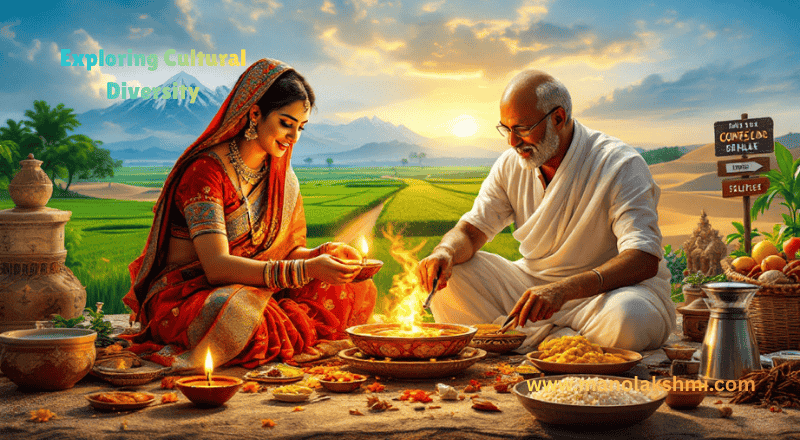
The concept of “unity in diversity” shows how shared values, historical experiences, and common aspirations bind Indians together despite variations in language, food, costume, and custom. This harmony is beautifully represented by the Indian flag:
Saffron for courage and renunciation, white for truth and peace, and green for faith and fertility.
The Principle of Unity in Diversity
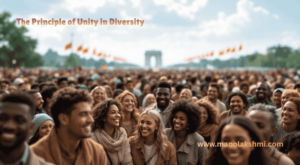
The foundational philosophy of “unity in diversity” illustrates a profound social cohesion. Where shared values, deep-rooted historical experiences, and collective aspirations transcend regional boundaries. This enduring bond ensures that despite a vast tapestry of differences. There remains a fundamental sense of national identity and mutual respect that unites the population as a whole.
Cultural and Regional Variations
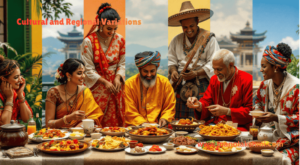
This diverse identity is vividly expressed through a wide array of regional elements. Across different communities, there are distinct variations in language, food, costume, and custom. Rather than dividing the people, these unique cultural practices, culinary traditions, traditional attires, and local customs enrich the collective heritage, serving as a testament to the country’s pluralistic fabric.
Symbolism of the National Flag
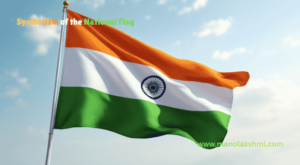
This harmonious coexistence is symbolically captured and represented by the national flag. Each color carries a significant meaning: saffron represents courage and renunciation, symbolizing strength and selfless dedication; white stands for truth and peace, highlighting the commitment to honesty and harmony; and green denotes faith and fertility, representing growth, prosperity, and the auspiciousness of the land.
Fascinating Facts About Incredible India
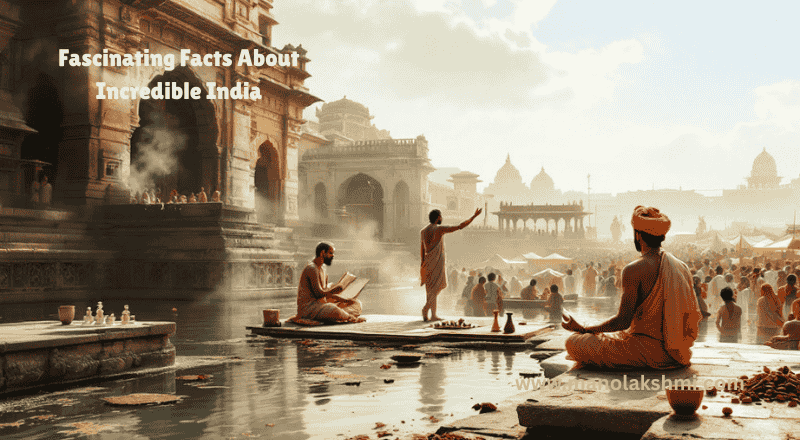
Beyond the well-known landmarks and celebrated traditions, India holds countless fascinating facts that reveal the depth of its cultural heritage and the accomplishments of its people.
The World’s First University: Nalanda University, established in 427 CE in Bihar, is recognised as the world’s first residential university. It attracted scholars from across Asia, offering instruction in various fields and maintaining a massive library.
Yoga and Meditation: India’s gift to global wellness, yoga, finds its roots in ancient Indian texts. The International Day of Yoga, celebrated worldwide on June 21st, acknowledges this 5,000-year-old practice that unites physical postures, breathing exercises, and meditation.
The Game of Chess: The precursor to modern chess, chaturanga, originated in India around the 6th century. This strategic game spread through Persia to Europe, evolving into the game we know today.
The Decimal System and Zero:
Indian cultural mathematicians developed the decimal system and formalized the concept of zero as both a symbol and a numerical value—a mathematical breakthrough that enabled the computing revolution.
The Nobel Prize Legacy: Rabindranath Tagore became the first Asian to win the Nobel Prize in Literature in 1913. India has since produced numerous Nobel laureates in categories ranging from physics to peace, reflecting the nation’s contributions across fields.
The Kumbh Mela: This mass pilgrimage, where millions gather to bathe in sacred rivers, is among the largest peaceful gatherings on Earth. The 2019 Kumbh Mela in Prayagraj attracted over 240 million visitors, creating temporary cities with their own infrastructure.
Spice Trade History: India has been the center of the global spice trade for millennia. The sought-after spices of ancient Rome—pepper, cardamom, and cinnamon—drew merchants from across the known world to Indian shores.
Ayurveda: One of the world’s oldest medical systems, Ayurveda dates back over 5,000 years. This holistic approach to health emphasizes balance in body, mind, and consciousness and continues to influence wellness practices globally.
Textile Heritage:
The famous Mughal miniatures often depict the elaborate fabrics that were India’s gift to global fashion.
Architectural Innovations: Rajasthan’s stepwells and intricate havelis, and the rock-cut temples of Mahabalipuram, represent architectural traditions evolved over centuries. Each region is developing unique solutions to climate, materials, and cultural requirements.
Preserving Traditions for Future Generations (Indian Culture)
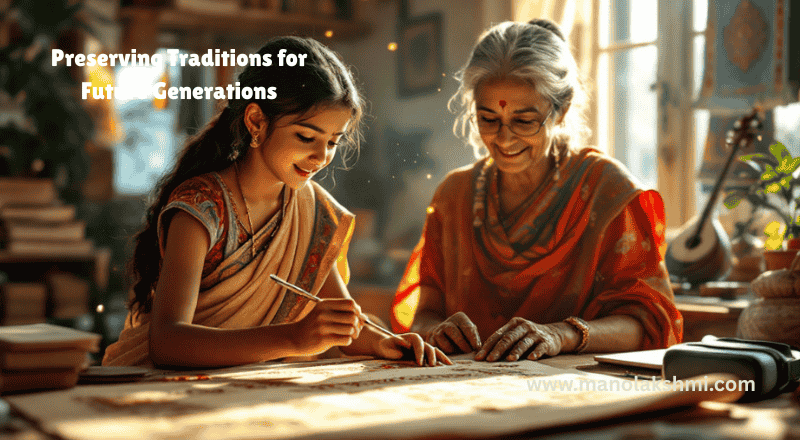
Educational initiatives drive cultural preservation through school curricula incorporating traditional arts, classical languages, and cultural history, alongside university research and digital archives.
Traditional arts are sustained by government and private support, utilizing GI tags to protect products like Banarasi silk, Kanchipuram silk, and Darjeeling tea from mass production while enhancing their value.
Technology delivers innovative tools, including high-resolution digitization for ancient manuscripts and temple sculptures and virtual reality experiences for historical sites.
Living traditions adapt continuously, as seen in contemporary choreography for classical Indian dance forms like Bharatanatyam and Kathak, as well as modern Ayurvedic wellness applications.
Conclusion: A Living Heritage Inviting Exploration (Indian Culture)
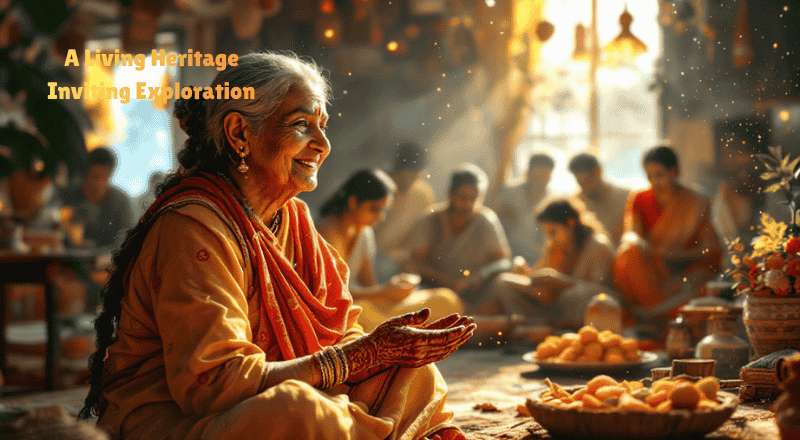
Indian culture is a good example of a society that can be vibrant in its relationship with the present and yet respectful of its past life.
The values found in Indian culture are respect for elders, hospitality to strangers, thirst for knowledge, and living in harmony with nature. The sacred in everyday life is wisdom that speaks far beyond the subcontinent. In an era of disconnection and division, India’s focus on relationships, rituals, and meaning gives us food for thought.
It lives in homes, temples, streets, and fields throughout the country. A living tradition that is open to curious visitors, engaged learners, and respectful seekers. The voyage into Indian culture is not a destination but a journey. A journey that pays off in patience, humility, and authentic curiosity. With insights that shed light on the human experience itself.
My most important lesson about Indian culture is that it is a living tradition, not a past relic, shaped continuously. By over a billion people who view themselves as custodians of something sacred. Through hospitality and honoring life milestones, they sustain a millennia-old legacy that can teach centuries to come.

Elevate your lifestyle with our curated content on technology, sports, travel, health, and fashion. Stay ahead of the trends and make informed choices.