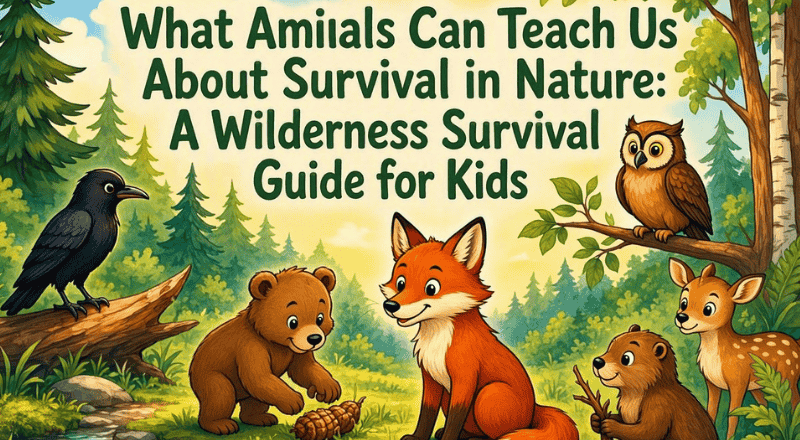
What Animals Can Teach Us About Survival in Nature: A Wilderness Survival Guide for Kids
Have you ever wondered how animals manage to live outside all year long without a house, a grocery store, or a cosy blanket? Whether it is freezing cold, super hot, raining, or dry, animals know exactly what to do to stay safe, healthy, and fed.
Nature is the ultimate classroom, and wild creatures are the ultimate teachers! By studying how animals survive, we can discover amazing nature facts for kids and learn valuable lessons from nature that help us understand the world around us.
From blending into the trees to building waterproof homes, animals use clever tricks, physical traits, and animal instincts every single day. Let’s dive into this ultimate wilderness survival guide for kids to see what our animal friends can teach us about staying alive in the wild!
- Master of Disguise: Camouflage in Nature
- Smart Builders: Animal Adaptations for Children
- Power in Numbers: Wildlife Survival Strategies Through Teamwork
- Energy Savers: Migration and Hibernation Secrets
- Trusting Your Senses: Super Animal Instincts
- Summary: Top Wilderness Lessons from Nature for Young Adventurers
- Become a Backyard Wildlife Detective!
Master of Disguise: Camouflage in Nature
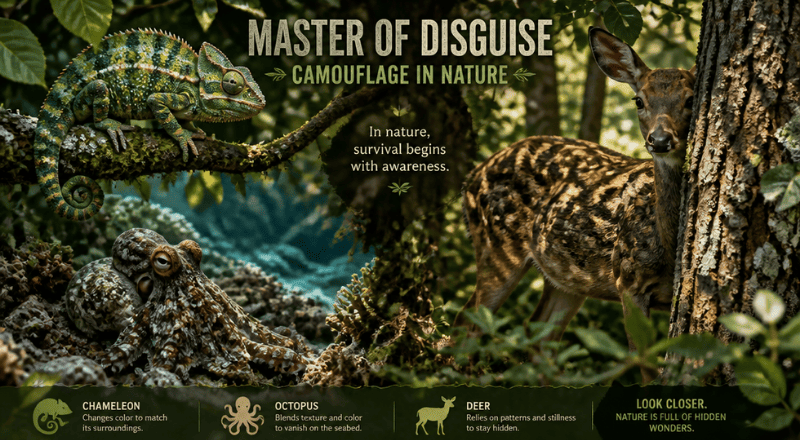
One of the most important animal survival skills is the ability to hide in plain sight. In the wild, hiding can keep an animal safe from predators, or it can help a predator sneak up on its lunch! This survival trick is called camouflage in nature.
Animals use colours, patterns, and shapes to blend into their surroundings. By looking closely at how they hide, we learn how important it is to pay attention to our environment.
Amazing Examples of Animal Camouflage:
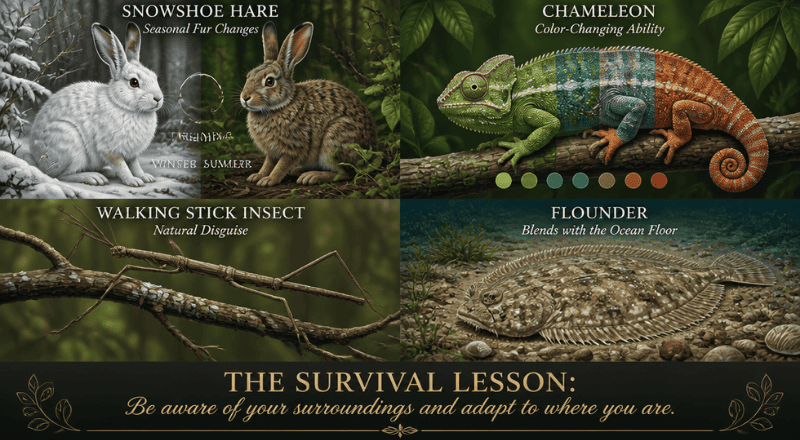
- The Snowshoe Hare: This clever mammal changes the colour of its fur depending on the season! In the summer, its fur is brown to match the dirt and rocks. In the winter, it turns pure white to blend into the snow.
- The Chameleon: Famous for changing colours, chameleons use special skin cells to match their mood, temperature, and surroundings.
- The Walking Stick Insect: This bug looks exactly like a wooden twig. If it stays completely still, hungry birds fly right past it without noticing!
- The Flounder: This flatfish lies on the ocean floor and shifts its skin pattern to match the sand and rocks underneath it.
The Survival Lesson: Be aware of your surroundings and adapt to where you are.
Smart Builders: Animal Adaptations for Children
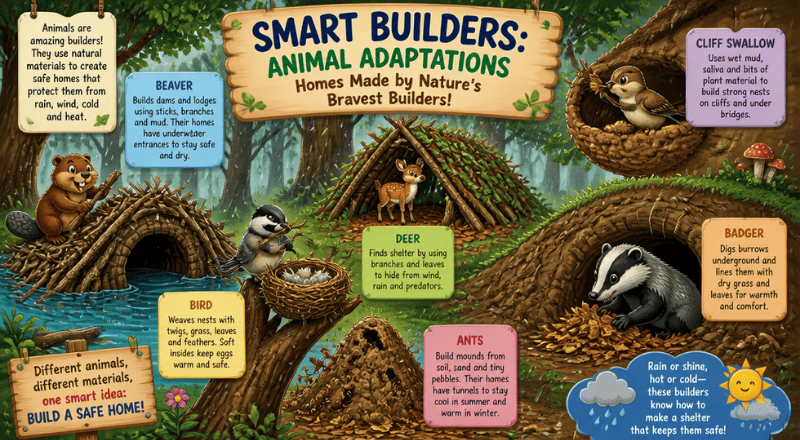
If you needed a shelter in the woods, could you build one out of sticks and mud? Animals do it all the time! Understanding animal adaptations for children shows us how smart creatures are when it comes to constructing safe places to rest, raise families, and hide from bad weather.
Creating a safe home is a key part of animal protection and survival. Animals use whatever materials are around them to design incredible structures.
Clever Animal Architects:
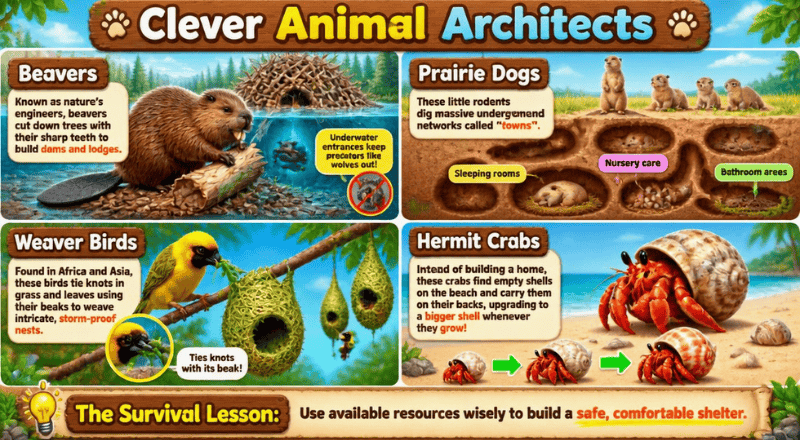
- Beavers: Known as nature’s engineers, beavers cut down trees with their sharp teeth to build dams and lodges. These wooden homes have underwater entrances that keep predators like wolves out!
- Prairie Dogs: These little rodents dig massive underground networks called “towns”. Their burrows have separate rooms for sleeping, nursery care for babies, and even bathroom areas!
- Weaver Birds: Found in Africa and Asia, these birds tie knots in grass and leaves using their beaks to weave intricate, storm-proof nests hanging from tree branches.
- Hermit Crabs: Instead of building a home, these crabs find empty shells on the beach and carry them on their backs, upgrading to a bigger shell whenever they grow!
The Survival Lesson: Use available resources wisely to build a safe, comfortable shelter.
Power in Numbers: Wildlife Survival Strategies Through Teamwork
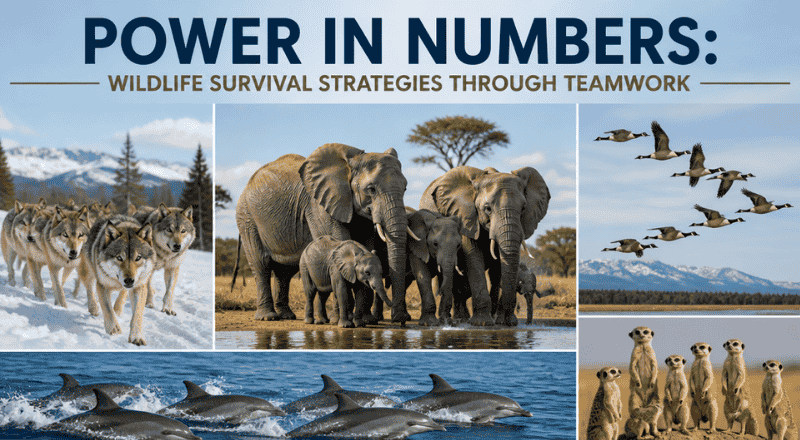
Sometimes, surviving alone is just too hard. That is why many species use social animal behaviour to stay safe. Working together is one of the most effective wildlife survival strategies in the natural world.
When animals form packs, herds, or swarms, they can protect each other, share food, and keep their young safe from danger.
How Animals Work Together:
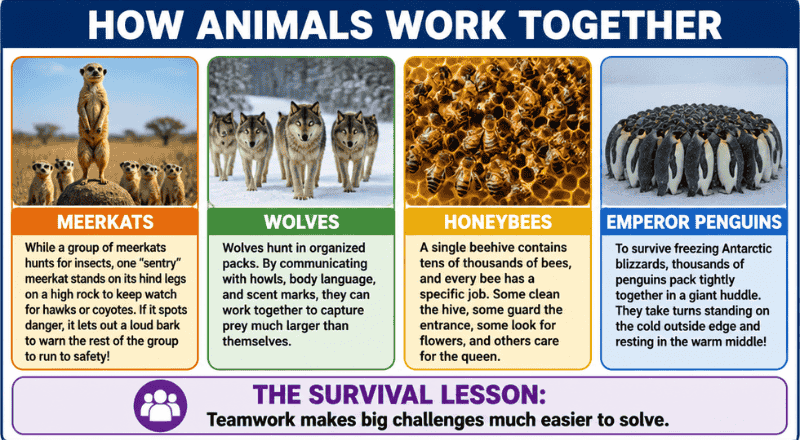
Meerkats: While a group of meerkats hunts for insects, one “sentry” meerkat stands on its hind legs on a high rock to keep watch for hawks or coyotes. If it spots danger, it lets out a loud bark to warn the rest of the group to run to safety!
- Wolves: Wolves hunt in organised packs. By communicating with howls, body language, and scent marks, they can work together to capture prey much larger than themselves.
- Honeybees: A single beehive contains tens of thousands of bees, and every bee has a specific job. Some clean the hive, some guard the entrance, some look for flowers, and others care for the queen.
- Emperor Penguins: To survive freezing Antarctic blizzards, thousands of penguins pack tightly together in a giant huddle. They take turns standing on the cold outside edge and resting in the warm middle!
The Survival Lesson: Teamwork makes big challenges much easier to solve.
Energy Savers: Migration and Hibernation Secrets
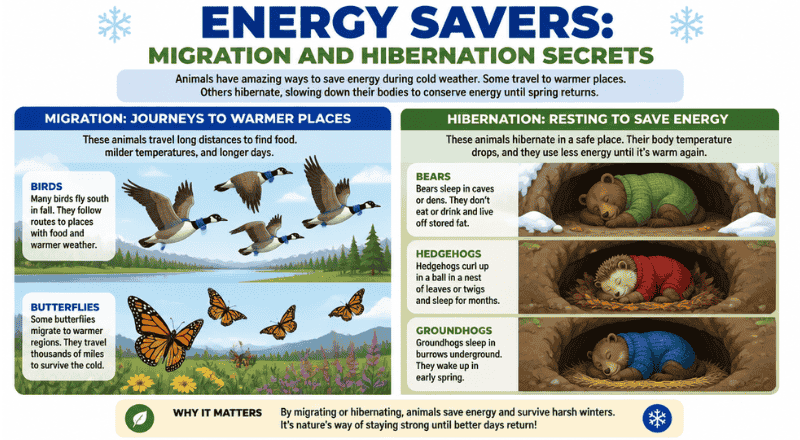
What do you do when the weather gets extremely cold and food disappears? Humans put on heavy coats and buy food from the store. But animals have developed unique biological tricks to get through tough seasons.
Through nature education and wildlife learning, we see two main ways animals deal with harsh winters: migration and hibernation.
Hibernation: Sleeping Through the Storm (Nature)
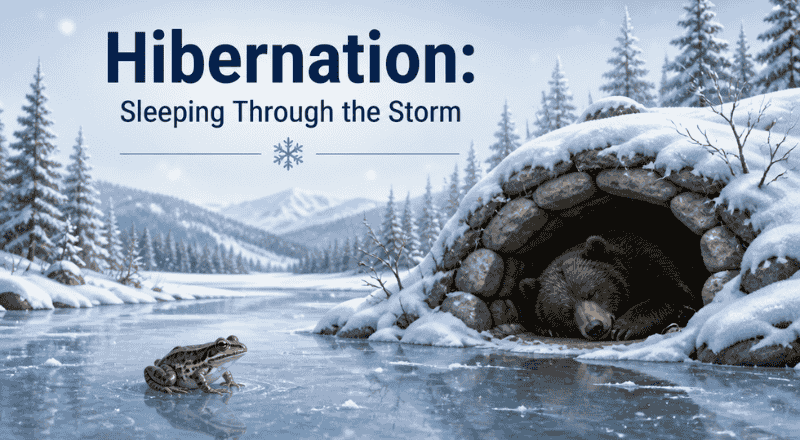
Hibernation is a deep sleep that helps animals save energy when food is scarce. Their heart rates slow down, their body temperatures drop, and they survive on stored body fat.
- Bears: Bears eat extra food during late summer and autumn to build up fat. They then spend the winter resting in dens without eating or drinking for months!
- Wood Frogs: These amazing amphibians literally freeze solid during the winter! Their heart stops beating, and they stop breathing. When spring arrives, they thaw out, wake up, and hop away.
Migration: Travelling for Survival
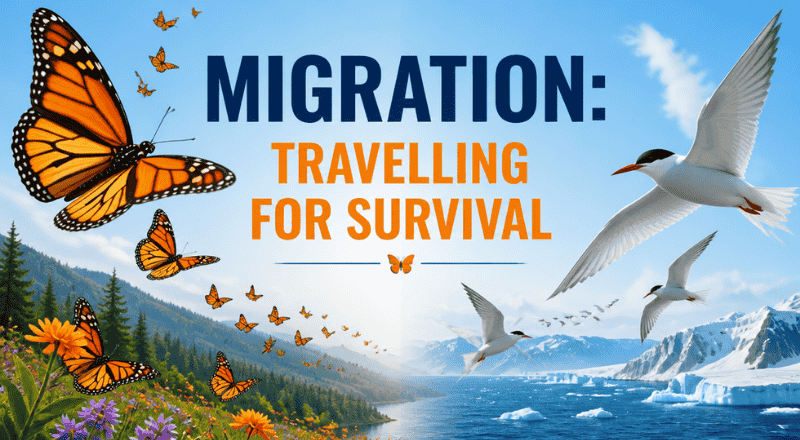
Migration means travelling long distances to find better weather, food, or safe places to nest.
- Monarch Butterflies: These light insects fly thousands of miles from North America all the way to warm forests in Mexico every autumn.
- Arctic Terns: This small bird makes the longest migration journey of any animal on Earth, flying from the Arctic to the Antarctic and back every year—a round trip of nearly 50,000 miles!
The Survival Lesson: Plan ahead for tough times and conserve your energy when resources are low.
Trusting Your Senses: Super Animal Instincts
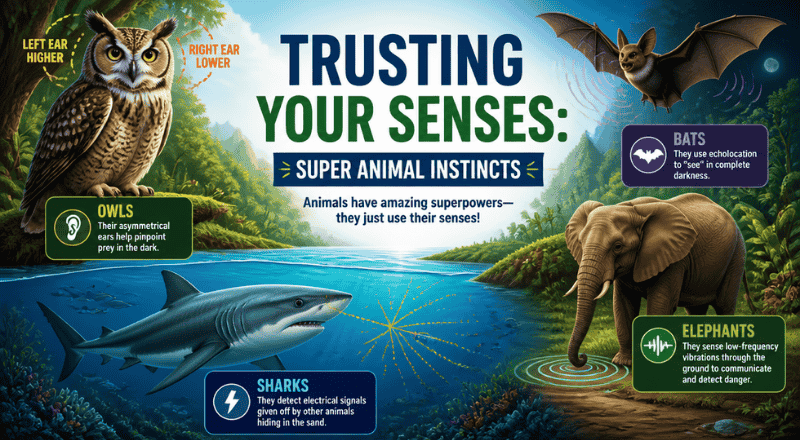
Animals don’t have smartphones, maps, or flashlights, yet they navigate deep forests and dark oceans effortlessly. How do they do it? They rely on incredible super-senses and sharp animal instincts!
Here are some fun facts about animals and their amazing senses:
Animal |
Super Sensory Skill |
|
Owls |
Asymmetrical ears help them hear mice under deep snow. |
|
Sharks |
Can feel electro-reception (tiny electrical signals of prey). |
|
Bats |
Use echolocation (sound bounces) to fly in total darkness. |
| Elephants |
Hear ultra-low vibrations through the soles of their feet. |
By relying on these sharp senses, animals can detect storms before they arrive, sense hidden predators, and find clean water from miles away.
The Survival Lesson: Listen carefully, observe your surroundings, and trust your natural instincts.
Summary: Top Wilderness Lessons from Nature for Young Adventurers
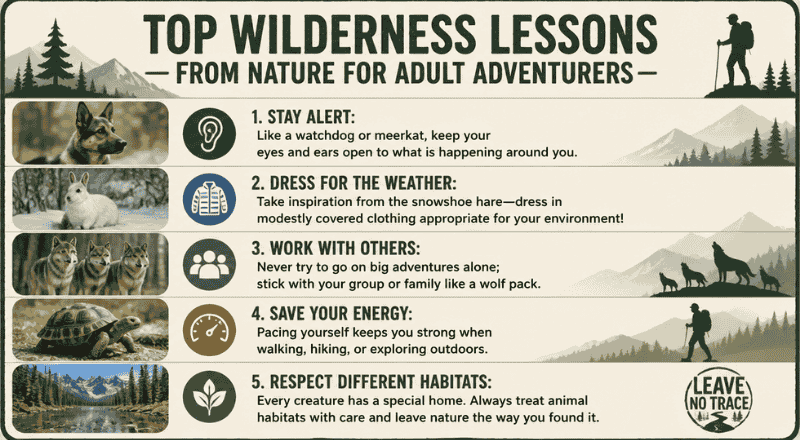
To wrap up our wilderness survival guide for kids, here is a quick checklist of survival tips we can copy directly from the animal kingdom:
- Stay Alert: Like a watchdog or meerkat, keep your eyes and ears open to what is happening around you.
- Dress for the Weather: Take inspiration from the snowshoe hare—dress appropriately for your environment!
- Work with Others: Never try to go on big adventures alone; stick with your group or family like a wolf pack.
- Save Your Energy: Pacing yourself keeps you strong when walking, hiking, or exploring outdoors.
- Respect Different Habitats: Every creature has a special home. Always treat animal habitats with care and leave nature the way you found it.
Become a Backyard Wildlife Detective!

Now that you know how animals survive, it’s your turn to step outside and put your observation skills to the test! You don’t need to travel to a jungle or a deep ocean to see survival skills in action—wildlife is living right in your neighborhood.
Your Outdoor Challenge:
- Go Outside: Head to your backyard, a local park, or a nearby nature trail.
- Look for Camouflage: Can you spot a bug that looks like a leaf or a bird whose feathers blend into the tree bark?
- Find Animal Homes: Look carefully (without touching!) for bird nests, ant hills, spider webs, or squirrel dreys high up in the trees.
- Watch Animal Behavior: Pick one animal—like an ant, a squirrel, or a robin—and watch it for five minutes. What is it doing to find food or stay safe?
Grab a notebook, head outdoors, and start exploring the wild world around you today! What amazing animal survival secrets will you discover first?
Click here: Nature’s Superpower: Why Do Some Animals Change Color?

Elevate your lifestyle with our curated content on technology, sports, travel, health, and fashion. Stay ahead of the trends and make informed choices.